Get your TENNESSEE Boating License Online with Boater Exam®
Who needs to take the Tennessee boaters safety course?
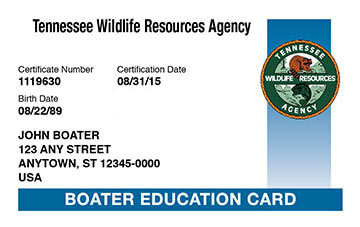
All boaters born after January 1, 1989 must have a Tennessee Boater Education Card to operate any motorized watercraft. BOATERexam.com® is a delegated provider for the Tennessee Wildlife Resources Agency.
Returning user? Log in here

Approved by the
Tennessee Wildlife Resources Agency

Good for life!
Get your official
Tennessee Boating License
Complete the Tennessee Boaters Safety Course in
4 Easy Steps
Take your BOATERexam® course and be certified for life!
Step 1
Sign Up
Sign up for a Boaterexam® account, pay for the official course, and get started. It only takes a few minutes.
Step 2
Study & Pass the Online Course
Take the course on desktop, tablet or mobile. We automatically save your progress so you can learn at your own pace.
Step 3
Complete Additional State Requirements
As a final step, a state-required in-person component is needed to obtain certification.
Step 4
Go Boating!
Hit the water! You're all set to legally operate a boat.
Over 2,000,000 boating students certified and counting:
BOATERexam.com has a TrustPilot rating of 4.7 out of 5 based on 17707 ratings and reviews.
Mobile Optimized
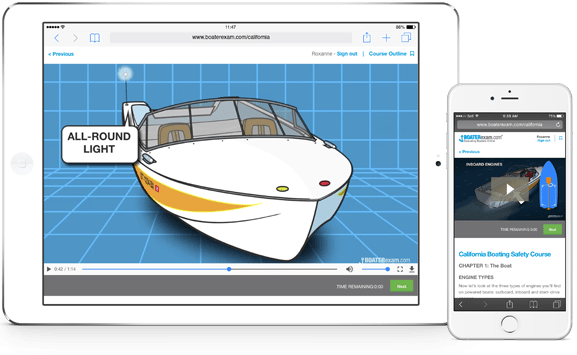
Study on Any Device
From laptop to mobile phone to tablet, choose when and where to take your boating course and get your Tennessee Boating Card.
Visual Exam Questions
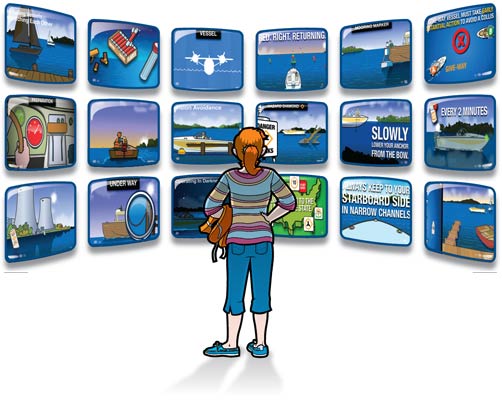
Visual Exam Questions Help You Learn
We found out a long time ago that people learn best when they can see what they're learning. Shouldn't you be tested the same way? Every one of our exam questions is illustrated to help you get your boating licence.
Engaging Videos
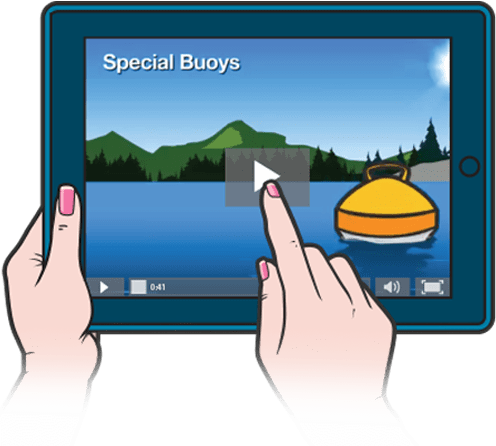
Hundreds of Engaging Videos
Our Tennessee boating license course features hundreds of rich engaging boating videos and animations. That means you aren't just reading: You're watching, listening and learning.
$49.95
Returning user? Log in here
Tennessee Approved Boating License & Safety Course

BOATERexam.com® is trusted by agencies across the United States to deliver the best of quality in boater safety. Our courses consistently receive the highest level of approval from agencies and from boaters.
This official Tennessee boating safety course is approved by the Tennessee Wildlife Resources Agency.
Tennessee Wildlife Resources Agency
P.O. Box 40747
Nashville, TN 37204
http://www.tn.gov/twra

Protect your on-water adventures
Relaxing on the water is easy when you’re protected with a leader in boat insurance. Progressive has the coverages you need to explore carefree and full of adventure! Discover how we can protect your boat today with coverage we offer to the 1 million+ watercraft we already insure.
Get a Quote

FAQs about getting a Tennessee Boating License
Below are some common questions about safe boating rules & regulations.
Q.
How much does the boat safety course cost?
A.
Q.
What payment methods are accepted?
A.
Q.
What is the "Certificate of Completion"?
A.
Q.
What is the Tennessee Boater Education Card?
A.
Q.
I do not have a driver's license. Can I still get the Tennessee boater license?
A.
Q.
How can I get my Tennessee boating license?
A.
You can obtain your Tennessee Boater Education Card in 3 easy steps:
- Pay the one-time fee of $49.95 – free unlimited retries of the final exam
- Study the Tennessee Boaters Safety Course, and pass the final exam
- Print off your Certificate of Completion immediately, and receive your permanent Tennessee Boater Education Card in the mail within 8-10 business days
This official Tennessee boaters safety course is approved by the Tennessee Wildlife Resources Agency.
Q.
How long is the boat safety course and boater license good for?
A.
Q.
Is anyone exempt from obtaining the Tennessee boating license?
A.
Q.
Is there a time limit to complete the online course?
A.
Q.
How many questions are on the exam?
A.
Q.
What is the passing grade?
A.

Need Help? Visit the BOATERexam.com® Help Center
The BOATERexam.com® Help Center is the place to find answers and solutions to your questions.
We've helped over 2 million people get certified online. So, we know what it takes.