How to Pass the Canadian Boating Exam: Study Tips, What to Expect
To pass the boater exam Canada requires, you'll need to complete a boating safety course approved by Transport Canada and score at least 75% on the 50-question, multiple-choice test at the end. This exam is open-book, and you can take it more than once if you don't pass on the first try.
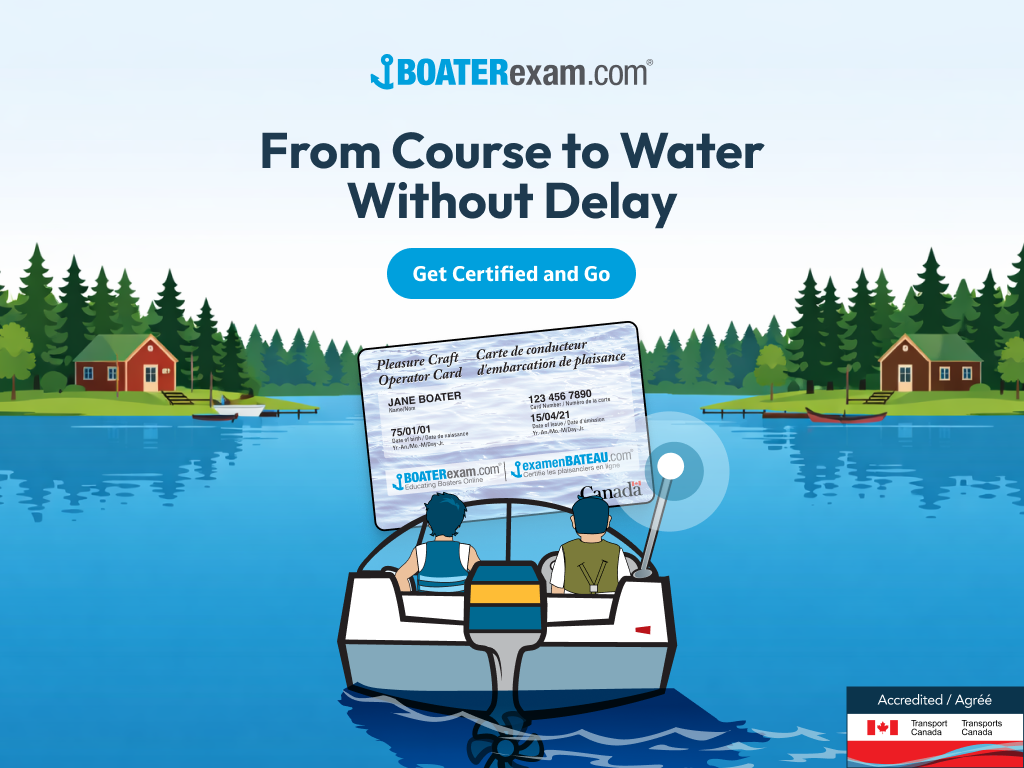
Once you pass the exam, you'll get your Canadian boating license, which is officially called the Pleasure Craft Operator Card (PCOC). Here's what to expect from the exam and how to study the right way, so you can pass the test and get out on the water as soon as possible.
What Is the Canadian Boating Exam?
The Canadian boating exam consists of 50 multiple-choice questions. You'll need to get 38 of them correct (75%) to get your PCOC. One of the best things about the exam is that it's open-book, so you can refer to your course materials and any notes while you take it.
The exam is also timed, and you'll typically have 75 minutes to complete it. Transport Canada has a Marine Safety question bank, and every test pulls 50 randomly generated questions from it. No two tests are identical, and if you have to take the test more than once, you'll have different questions each time.
You can complete the exam to earn your Pleasure Craft Operator Card from the comfort of your home or at any location with internet access. You don't need a supervisor or proctor, and you don't have to go to a specific facility to take the test.
Remember, this exam is the official Transport Canada Boating Safety Test, not a quiz created by your course provider.
Canadian Boating Exam Overview | |
Detail | Requirement |
Number of Questions | 50 |
Question Format | Multiple choice |
Pass Mark | (38/50 correct) |
Time Limit | 75 minutes |
Open Book? | Yes |
Attempts per Day | 1 |
Retake Wait Period | 24 hours |
Validity | Lifetime (no expiry) |
Who Needs to Take It?
If you're going to operate a motorized pleasure craft on Canada's waterways, you'll need to show proof of competency. That means taking the Canadian boating exam to get your PCOC.
Law enforcement may ask for your card if they stop you for any reason, and you'll generally also need it to insure your vessel or use a local marina. Canada's boating license laws must be followed at all times while you're on the water, whether you're using your own boat or renting one.
Once you have your PCOC, it's recognized across every province and territory, and that applies to both residents and visitors. For example, if you're looking to take the Ontario boater exam, you should know that Ontario's requirements align with federal standards, and there isn't a separate provincial exam.
Not only is your PCOC good for life, but the cost of a boating license is low (typically $30-$70 CAD), and you can take the course in an afternoon or evening. Most people spend between three and five hours total to complete the course and take the exam at the end.


What Topics Does the Canadian Boater Exam Cover?
The exam's questions are closely tied to the course topics. You can be confident you'll learn everything you need to pass the test by taking the course from a Transport Canada-approved provider.
As you work your way through the course and get ready for the exam, you can expect to learn about safety, navigation, nautical terms, and more.
- Nautical terms and boat basics: This includes the parts of a vessel, the difference between port and starboard, and other common terminology you'll use when operating your boat.
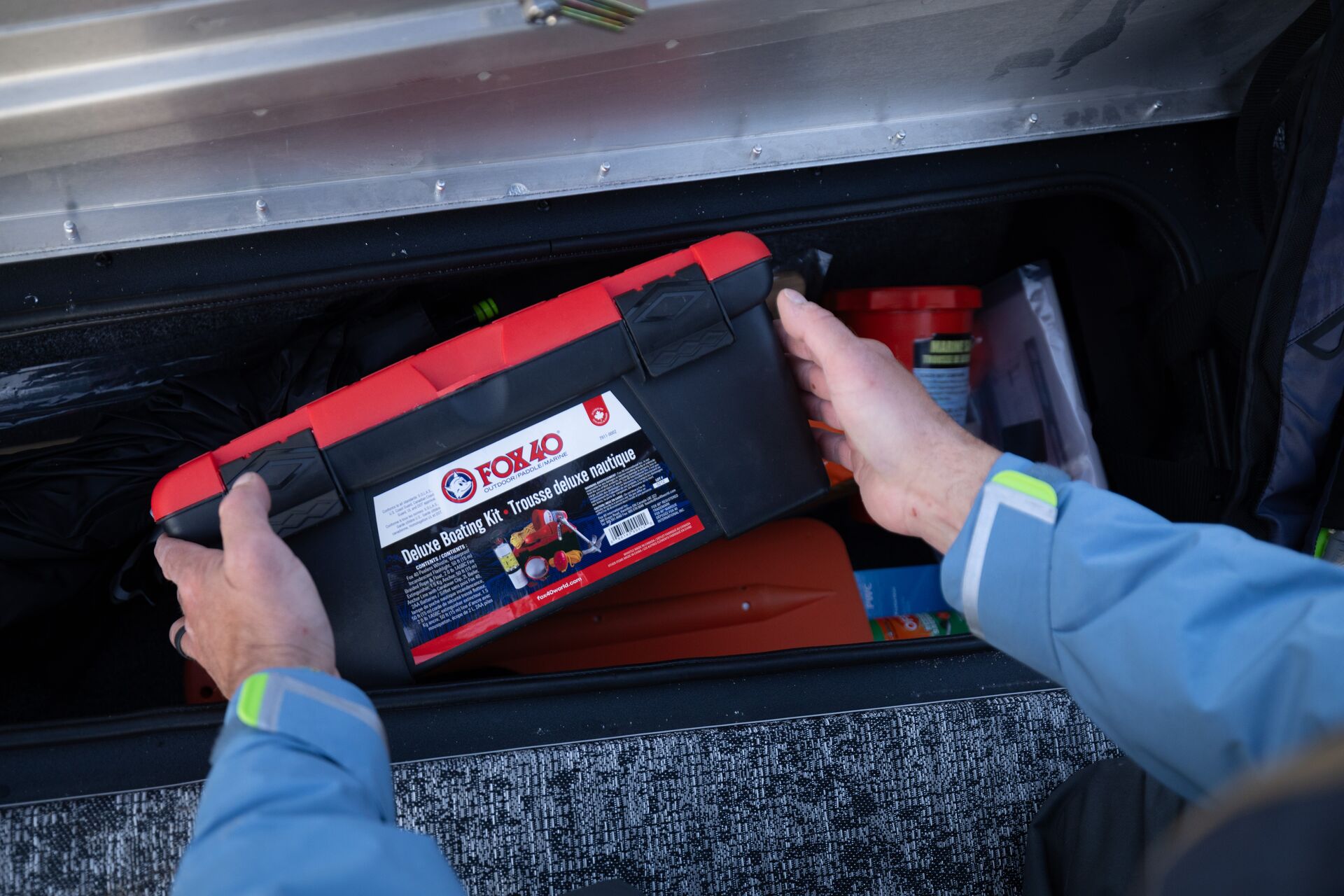
- Required safety equipment: Certain items must be on board, and the requirements depend on your vessel's class and size. There are personal flotation device (PFD) requirements, as well as specifics for fire extinguishers, flares, and other items.
- Navigation lights and buoys: You'll learn the meanings of different lights and markers, as well as when each should be used.
- Rules of the road: Boaters need to understand right-of-way situations, including meeting, crossing, and overtaking, to avoid contact with other vessels.
- Safe operation: Speed zones, how wakes are created (and how dangerous they can be for other boaters), what to do in no-wake zones, and how to handle anchoring are all vital skills.
- Fueling safety: There are specific procedures to prevent fires and explosions, and learning the proper way to fuel your vessel helps protect you and your passengers.
- Emergency preparedness: If something goes wrong, you may need to send out distress signals, especially in a man-overboard situation, if your vessel is capsizing, or if there's a fire on board.
- Environmental rules: Many areas are no-discharge zones with waste-disposal regulations, and failing to comply can lead to environmental damage and hefty penalties.
Taking a Transport Canada-approved safety course can teach you the basics and provide a lot of valuable information in a short time. That can help you boat safely and increase your confidence.
How to Study for the Boater Exam Canada Requires
There are some important tips to help you study for the boater exam Canada requires you to take, and the first is to complete the full course.
Transport Canada requires you to study for at least three hours and pass the quiz at the end of each chapter before moving on to the next. It can be tempting to hurry, but don't rush through the material.
Instead:
- Take notes, organize them, and know where to find key information and reference tables, such as data on equipment requirements by vessel length or navigation lights. You can refer to the course material during your exam, so take advantage of the open-book testing.
- Also, take the chapter quizzes seriously. They're designed to reinforce your retention before you take the official test. By spending extra time on topics that feel less intuitive to you, you'll increase your chances of passing the quizzes and the final exam. Right-of-way rules and navigation lights are often the areas where new boaters lose confidence or become confused.
- Study the material on the same device you plan to use for the test, so you're more comfortable with the format. The free study guide from BOATERexam offers additional resources to help you prepare for your exam.
What Happens If You Fail?
If you don't pass your exam, you must wait 24 hours before retaking it. Failing the second time requires you to retake the full course online before trying again, but most providers offer this at no extra cost.
Transport Canada has a retake rule for this exam because the course is important preparation for safe boating. You're not being penalized by going back over the course, and you'll have a stronger understanding of the material after a second read-through.
Take the Boater Exam Canada Requires with BOATERexam
The Canadian boating exam can generally be passed by anyone who completes the course, as long as they pay attention to the material and go back through it if they're not confident the first time. The test is open-book, with a straightforward format and a 75% passing grade requirement.
Once you're certified, you'll have your PCOC, which is valid for life and will let you enjoy Canada's waterways for years.

Frequently Asked Questions (FAQs)
Q: How many questions are on the Canadian boating exam?
A: The Canadian boating exam has 50 multiple-choice questions. To pass and earn your Pleasure Craft Operator Card (PCOC), you must answer at least 38 questions correctly, which is a score of 75%.
Q: Is the Canadian boating exam open-book?
A: Yes. The Canadian boating exam is open-book, so you can refer to your course materials and notes while taking the test. It's still important to understand the material, as the questions are randomly selected from Transport Canada's question bank.
Q: How hard is the Canadian boating exam?
A: Most people find the Canadian boating exam straightforward if they've completed the required boating safety course. Since it's open-book and covers the same topics taught in the course, reviewing your notes and passing the chapter quizzes usually provides good preparation.
Q: What happens if I fail the boating exam in Canada?
A: If you don't pass the exam on your first attempt, you'll need to wait 24 hours before trying again. If you fail a second time, you'll be required to complete the full boating safety course again before taking another exam.
Q: How long is the Canadian boating exam?
A: The Canadian boating exam typically allows up to 75 minutes to complete 50 multiple-choice questions. Many people finish sooner, but you can use the full time if you need it.
Q: Is the Ontario boating exam different from the national exam?
A: No. Ontario does not have a separate provincial boating exam. The same Transport Canada-approved exam is used across Canada, and the resulting Pleasure Craft Operator Card is valid nationwide.
Q: How long does it take to get a boating license in Canada?
A: Most people complete the required boating safety course and exam in three to five hours. After passing the exam, you'll receive proof of competency, and your Pleasure Craft Operator Card is valid for life.