Boat Terms 101: A Comprehensive Guide
Learning about boat terminology will not only help you on the water—it will also help you understand the tradition and evolution of boating and navigation. Today's sleek fiberglass boats may not resemble ancient wooden crafts, but in this nautical terms list, you will see a direct line from early seafaring to modern boating.
As you learn these terms, you'll be able to appreciate how mariners have used these words for centuries. Knowledge of boating terminology makes you part of a long tradition of exploring, fishing, and enjoying the water, and it helps you become a safer, more responsible boater.
Today, we'll cover some of the basic boating terminology every boat operator should know.
Basic Boat Terms Every Boater Should Know
Let's get started with some of the basic terms you'll need to know to operate a boat safely!
Hull
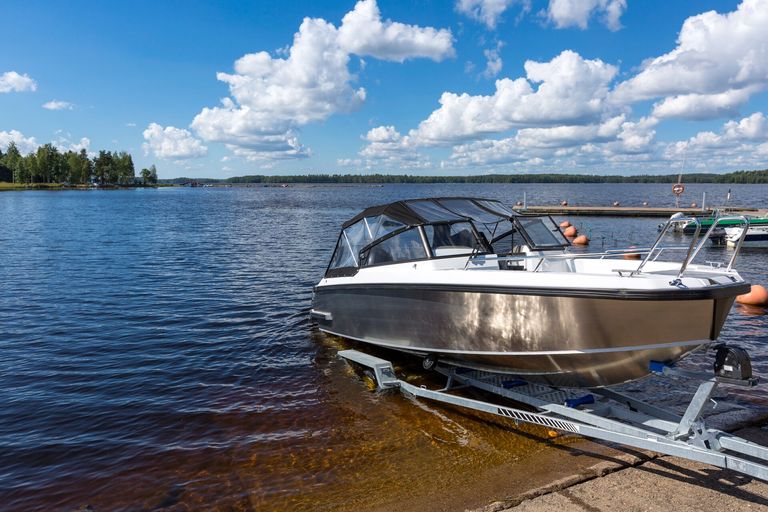
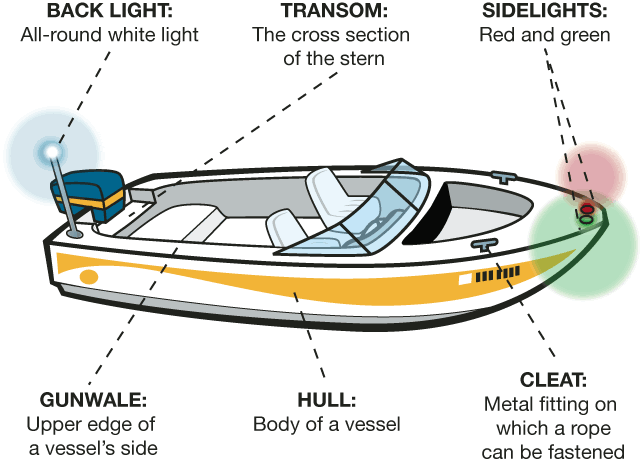
The hull of the boat sits in the water, and it may have a flat-bottom, gentle curves, or a V-shaped profile. Every inch of the hull is designed for a purpose, including navigating in shallow water, getting up on plane quickly, and cutting through choppy waves.
Early hulls resembled open peapods or nut shells, but modern hulls often feature multiple angles, chines, and flat areas to enhance stability.
Deck
The deck of the boat is above the hull. It's a (mostly) flat surface. The type of boat will determine where you can walk or sit on the deck.
Beam
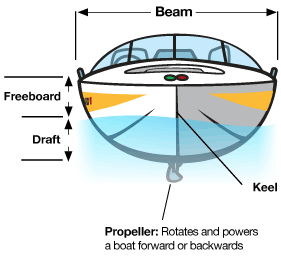
The beam of a boat is the measurement of the widest part of the vessel. The beam maximizes stability and interior space.
Generally, a wider beam will provide greater stability on the water.
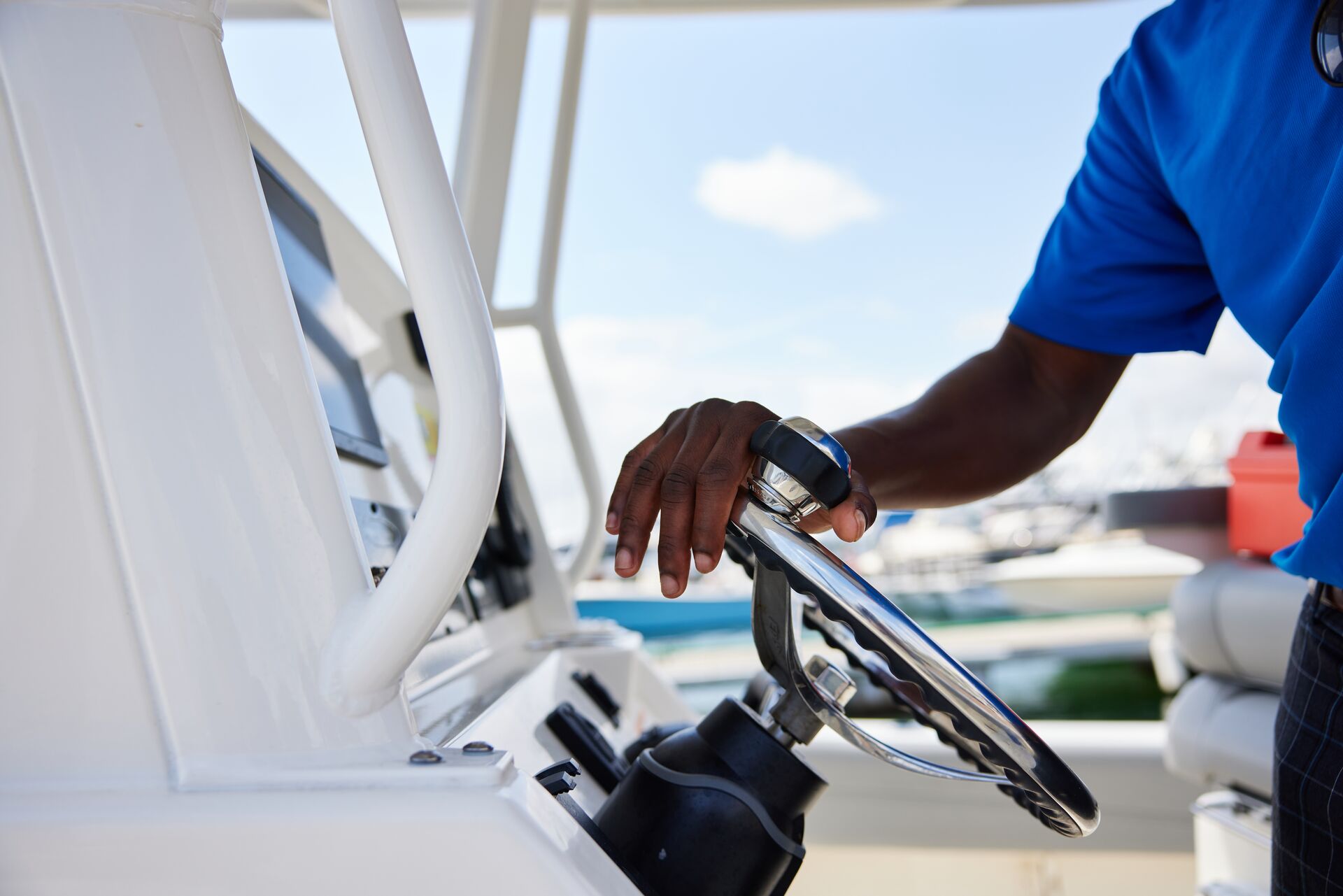
Helm
Head to the bridge and take the helm!
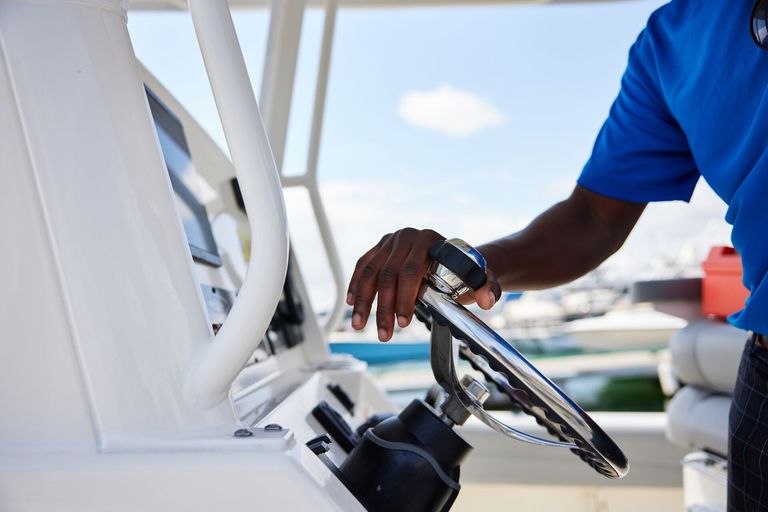
The helm is where the boat's controls are located, including the steering, throttle, and other instruments and navigation tools.
Bilge
Water gets into every boat, and it collects in the bilge. The bilge is the lowest part of the vessel, and bilge pumps remove water. The word has its roots in the rounded "bulge" of a ship's hull, and in swelling from collected water.
Gunwale
The gunwale—pronounced "gun uhl"—is the top edge of a boat's side. On early warships, the gunwales featured cannons.
Cleats
Today, instead of cannons, you can find cleats mounted on a gunwale. Cleats are sturdy fittings (often made of metal) used to attach lines.
Fender
When tying up to a dock or to another boat, you may use the cleats to secure a fender. The fender is a type of cushion that will protect your boat from contact with a dock or other vessels.


What Are the Four Sides of a Boat Called?
Now that you've stepped onboard the deck, it's time to get your bearings.
- The front of the boat is the bow.
- The back of the boat is the stern.
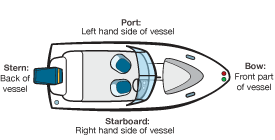
You may also hear terms such as "fore" and "aft." These terms indicate direction, with fore meaning toward the bow and aft to the stern.
When facing toward the bow
- The left side of the boat is the port side.
- The right is the starboard side.
The terms "port" and "starboard" come from the days when captains maneuvered boats with a "steering board" or oar on the right side of the vessel. Boats would dock or come to port on the left because the steering oar was used on the right.
These terms never change based on your direction of travel: when facing forward, the port is always on the left side, and the starboard is to the right. As a tip for remembering terms, the words "port" and "left" both have four letters.
Other Essential Terms
Continue building your boating vocabulary as you become a more experienced boat operator.
Lines
"Toss me that line!" Different types of rope are used aboard as lines for docking a vessel, securing loads, or even for towing.
Wake
As your boat moves through the water, you will create a wake, which is a set of V-shaped waves and turbulence that radiates from the bow and stern. Wakes are relative to a boat's size, displacement, speed, and type of hull.
Near a harbor or channel, you're likely to see signs for a No Wake Zone, where vessels must operate at the slowest possible speed.
Draft
What's the minimum depth of water you need for your boat? The draft is a measurement of the vertical distance from the waterline to the lowest point of the ship, which may be the hull, keel, or propeller.
The draft is a critical number to know when exploring shallow waters. You may hear it described as, "This boat draws 24 inches." In that case, you'll run aground with less than two feet of water.
Knot
Before speedometers and GPS, sailors measured a boat's speed with a knotted rope tied at regular intervals. They would attach a log to the end of the rope, throw it from the stern, and then count the knots that passed through their hands every minute.
Today, a knot is defined as one nautical mile per hour (or about 1.15 mph).
Why It's Important to Know Common Boating Words
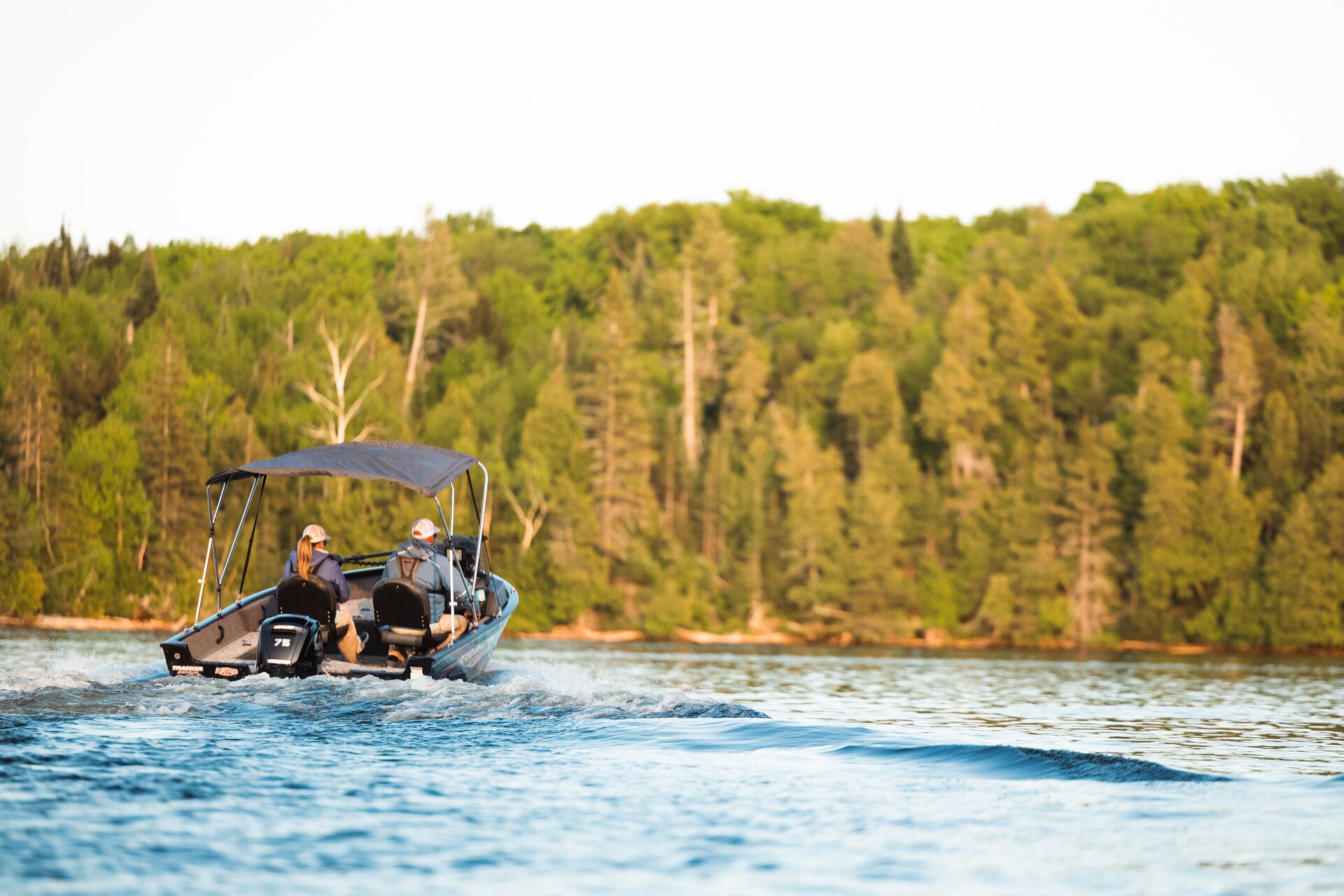
If there's an emergency on the water or during docking, it's important to know these boat terms to communicate quickly and clearly. It's a matter of safety, and understanding the language of boating can help prevent accidents.
When navigating, you will need to recognize terms such as port and starboard. You'll need to understand the meaning—and measurement—of the boat's draft when reading a chart or looking at the depth finder.
You can't be an effective member of a team without communication, and these terms are critical if you want to be able to give directions or follow commands from your fellow crew members.
When you use these terms, you show respect for other boaters and the maritime tradition—and boating etiquette can even start at the dock. Before hopping on a friend's boat, ask: "Request permission to come aboard." They will be delighted with this sign of respect, replying: "Permission granted. Come aboard!"
Learning boat terms can reduce misunderstandings and improve the efficiency of nautical activities. As you become more comfortable with these common boating words, your confidence on the water will grow.
How Boaters Can Learn Crucial Boat Terms and Skills
A nautical terms list is the foundation of safe boating and maritime skills. Here are some ways you can build your knowledge of boat terms and increase your boating safety.
- Boating safety courses: You can take classes and access information offered by the Coast Guard Auxiliary, Power Squadron, or a local club. Taking an online boater education course (like BOATERexam) is also an excellent way to learn boating terminology.
- Hands-on practice: Spend time using boat terms while docking, steering, and tying lines.
- Mentorship: Learn from experienced boaters and crew members as they apply these terms in real-life situations.
- Boating guides and manuals: Consult a boating guide or manual with a glossary and a boat terms diagram that describes every inch of the vessel.
- Apps and online resources: Digital flashcards, quizzes, and tutorials may help you visualize boating maneuvers and test your knowledge of terminology.
- Dockside walk-throughs: The next time you're at a marina or on the deck of a boat, point out the things you've learned and share your observations with others.
- Repetition in context: Try giving commands that incorporate boat terms—for example, "Bring the fender to the starboard side."
- Simulation and drills: Apply your newfound vocabulary to mock scenarios in which you're docking, anchoring the boat, or practicing an emergency procedure.
Find a learning style that works for you, keep practicing, and build your expertise!
Learn Essential Boat Terms Before Leaving the Dock
Embrace these nautical terms as you prepare to head out on the water, and consider taking a boater education course to learn more! You'll use boat terms every time you cast off the lines, drive a boat, navigate a channel, and keep yourself and others safe.
While in practice, knowing these terms helps you navigate the waters more safely, becoming proficient in boating vocabulary is not the only reason to take a boater education course. Most states require motorized boat operators to take and pass a course, then carry a boater education card as proof of certification when driving a boat.
BOATERexam makes it easy to meet the boater education requirements for your area and learn important terms! We offer courses for each US state and a course for Canadian boaters.


Frequently Asked Questions (FAQs)
We have answers to common questions about boating terminology!
Q: What are the basic boat terms?
A: The basic boat terms are: Bow (front), stern (back), port (left), starboard (right), hull (body), deck (top), keel (bottom spine), helm (steering area), rudder (steering blade), mast (spar for sails), boom (horizontal spar), cockpit (crew area), and cabin (enclosed space).
Q: What are the four sides of a boat called?
A: The four sides of a boat are the bow (front), stern (back), Port (left, when facing forward), and Starboard (right, when facing forward.
Q: What does port and starboard mean?
A: They’re the fixed left (port) and right (starboard) sides of a boat when you’re facing the bow. The terms avoid confusion compared to “left” and “right,” which change with direction.
Q: What are the 15 maritime terms?
A: 15 maritime terms include: 1) Bow, 2) Stern, 3) Port, 4) Starboard, 5) Hull, 6) Deck, 7) Keel, 8) Rudder, 9) Helm, 10) Mast, 11) Boom, 12) Sail, 13) Cockpit, 14) Cabin, and 15) Aft (toward the stern).