Top 5 Rarest Fish Ever Caught
About 71 percent of the Earth is covered in water. In our six ocean realms (the human edges, hidden boundaries, light and dark zones of the central waters, active geology, ice, and microscopic), all kinds of species, from the known and unknown to the unknowable, have garnered the interest of fishermen and marine experts alike.
While a boat license may allow you to operate motorized watercraft of all kinds, there are no licenses for catching any rare species.
We know of about 20,000 species of fish, but there could be thousands more. Many species may never be caught and named, but here's a look at five of the most incredible and rare catches that human eyes have ever seen. We'll also talk about staying safe when fishing for any species (rare or otherwise)!
Updated January 26, 2026
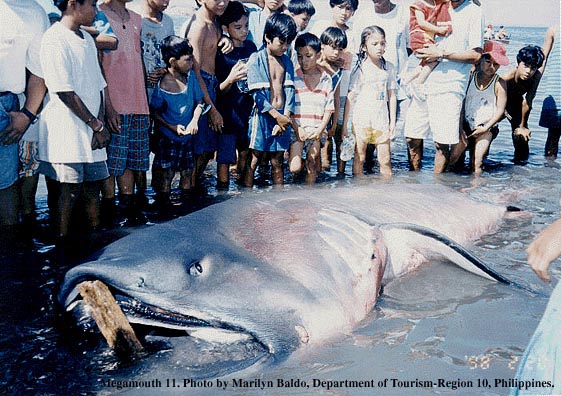
1. Megamouth Shark
In April 2009, fishermen in the Philippines caught and later feasted on a 1,100-pound, 13-foot megamouth shark. The megamouth is one of the rarest fish species in the world, with only 273 recorded sightings.
The first megamouth was discovered in Hawaii in 1976, prompting scientists to create a new family and genus of sharks. The discovery was hailed as the marine find of the 20th century, rivaling the discovery of the Coelacanth in the 1930s.
Megamouth Characteristics
As their name implies, megamouths have a large mouth with small teeth and a broad, rounded snout. The mouth is surrounded by luminous photophores, which may act as a lure for plankton or small fish.
A relatively poor swimmer, the megamouth has a soft, flabby body.
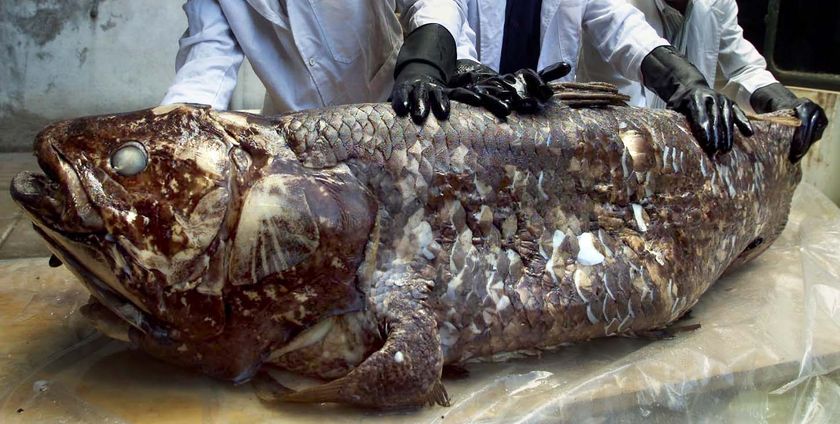
2. Dinofishy (Coelacanth)
Until its discovery in 1938, it was believed that the Coelacanth (pronounced 'see-la-canth') became extinct at the end of the Cretaceous period, 65 million years ago.
Four fishermen caught the rare fish off the coast of Zanzibar, Tanzania, in June 2007. It weighed 59.5 pounds and measured 4.4 feet.
Coelacanth Characteristics
Coelacanths are the only living animals with a fully functional intracranial joint, a division separating the ear and brain from the nasal organs and the eye. They have an extra lobe on the tail, paired lobed fins, and a vertebral column that is not fully developed.
One of the most unique features of the Coelacanth is that it has paired fins that move like our arms and legs.


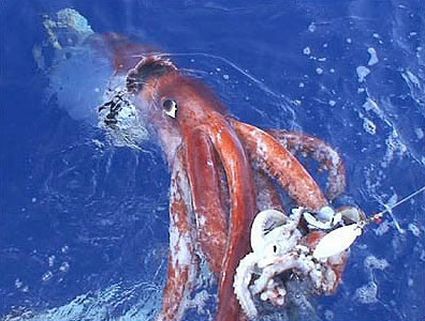
Image source: Eco Tourism Blog
3. Colossal Squid
Colossal Squids come equipped with sharp swiveling or three-pointer hooks on their tentacles to help gash and capture their prey. It feeds on prey using bioluminescence (emitting light) and has a wider and heavier body than a giant squid.
In fact, the colossal is believed to be the largest squid species in terms of mass.
Fun Fact: The colossal squid would yield calamari rings the size of tractor tires.
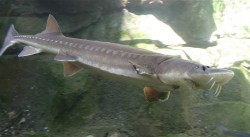
4. Large Chinese Sturgeon
Considered a living fossil (and therefore one of the rarest fish to catch), a Chinese sturgeon was caught accidentally by a local in the province of Jiangxi. The sturgeon measured nearly five feet and weighed 45 pounds. These critically endangered species are thought to have lived 140 million years ago with the dinosaurs.
Chinese Sturgeon Characteristics
Sturgeons lack a vertebral centrum and have scutes (bony plates) rather than scales. Though they lack teeth for seizing prey, they can swallow fish as big as salmon.
A grown-up sturgeon can measure up to four meters and weigh over 1,000 pounds.
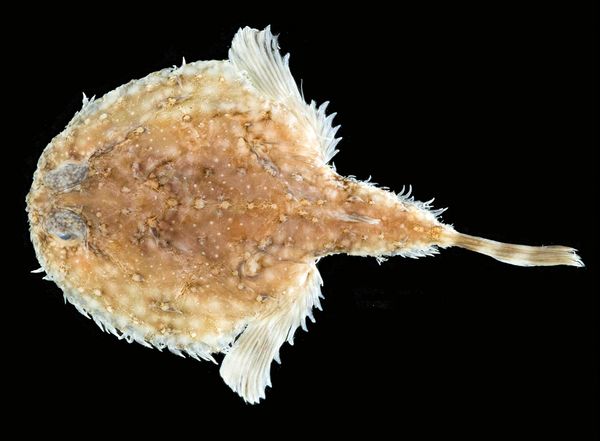
5. Halieutichthys Aculeatus (Pancake Batfish)
In December 2010, a Tauranga, NZ, fishing vessel caught one of the rarest fish to catch, the "pancake batfish." According to marine experts, this handsome fellow is a relatively unknown species.
One of the most remarkable aspects of the rare catch was that they managed to keep the fish alive. The deep-sea bottom dweller had been pulled from a depth of about 350m when the Skipper caught a glimpse of orange.
The two fishermen saw it kicking in the net, so they put it in a bucket and rubbed its stomach. Stomach-rubbing helps reduce the amount of oxygen in the fish's swim bladder, which expands when a fish is brought rapidly to the surface. Had the pressure not been released from the stomach, the fish could have exploded and died.
Pancake Batfish Characteristics
These rare species are flat like a pancake and have arm-like fins reminiscent of a walking bat when they waddle along the seafloor.
The pancake batfish inhabits a subtropical, sandy, reef-associated environment 45–820 meters deep. Two new species of batfish were discovered in the Gulf of Mexico in 2010, in the region directly affected by the BP oil spill.
Fishing for Any Fish Species Requires Good Safety
While you may never catch one of these rare fish species (but you could), staying safe while fishing is crucial!
Whether fishing in a river, lake, or ocean, anglers must follow boating safety essentials to bring home their favorite catches. Take a boater safety course for your state in the US (or the course for Canadian boaters) and get certified before hitting the water.

Boating Education Keeps Anglers Safe On the Water
Whether you've reeled in one of the rarest fish caught, or you're simply planning to go bass fishing or catch some walleye, boaters and anglers should wear lifejackets when on the water and carry crucial safety equipment on board. You also need to understand how to navigate around other boaters on the water, whether competing for a colossal squid or a boat full of trout.
BOATERexam provides online boating education courses for Canadian boaters and boat operators in the U.S. Before hitting the water in search of your rare (or not-so-rare) catch of the day, make sure you've passed the required safety certification to boat legally and protect yourself and others on the water.
Boat safely and legally in the U.S. or Canada this season!


Content most recently reviewed and updated January 26, 2026.
Frequently Asked Questions (FAQs)
We have answers to top questions about the world's rarest catches!
Q: What is the #1 rarest fish in the world?
A: The #1 rarest fish is often cited as the Devils Hole pupfish. It lives in a single limestone cavern in Nevada, with a population that has dipped to just a few dozen individuals.
Q: What fish is worth $1 million?
A: The Platinum Arowana, a rare, pale mutation of the Asian arowana has sold for up to $1 million in the luxury aquarium trade.
Q: What is the rarest fish ever found?
A: The Devils Hole pupfish again takes this title as the rarest fish ever found, since it has the smallest known natural habitat of any vertebrate on Earth.
Q: What is the #1 most endangered fish?
A: The Chinese paddlefish is often listed as the most endangered fish. It was declared functionally extinct in the 2020s due to overfishing and dam construction.