Who Needs a Boating Safety Course in Canada? (PCOC Requirements 2026)

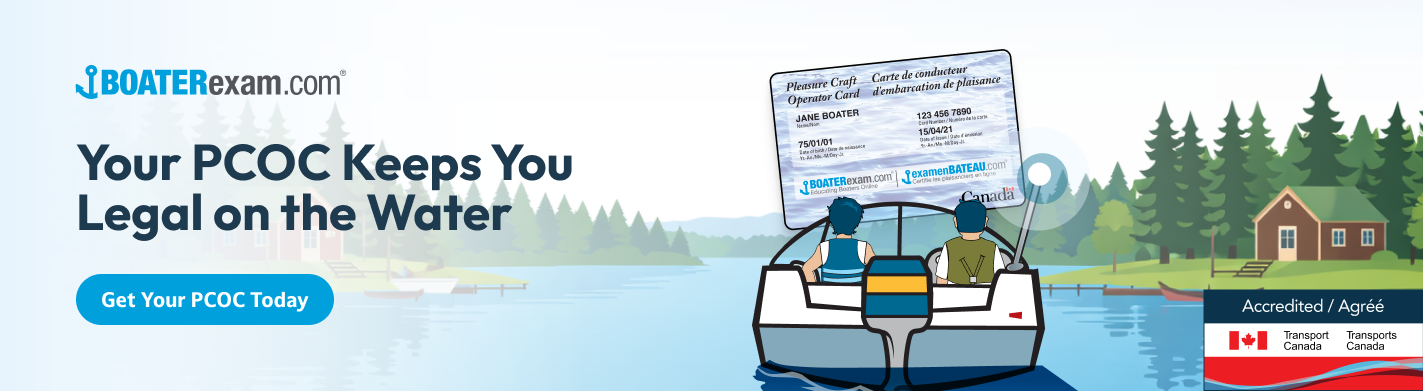
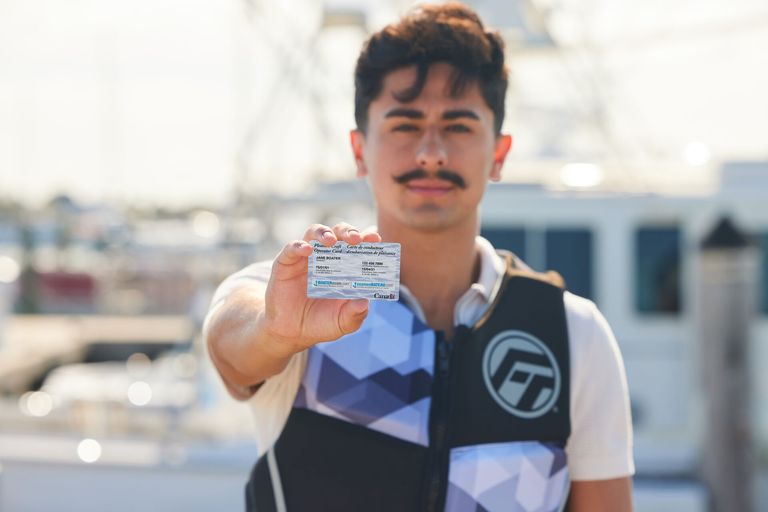
All Canadian boaters who operate a motorized pleasure craft are legally required to hold and carry proof of competency on the water. This proof will likely take the form of a Pleasure Craft Operator Card (PCOC). The PCOC requirement is federal and applies nationwide, with only a few exceptions, and it has no minimum age or horsepower threshold.
The PCOC is often referred to as a Canada boater's license because it serves a similar purpose. But boating certification in Canada is actually the PCOC certification, which shows the holder has completed a Transport Canada–approved boating safety course and passed the associated exam.
We’re breaking down the rules and regulations regarding PCOC, so whether you’re a visitor or a local, you’ll know exactly how to stay on top of them and stay safe out on the water.
What Is the PCOC and Why Does It Exist?
All operators of motorized pleasure craft in Canada must demonstrate proof of competency on the water. The most common way to do so is by obtaining a Pleasure Craft Operator Card (PCOC).
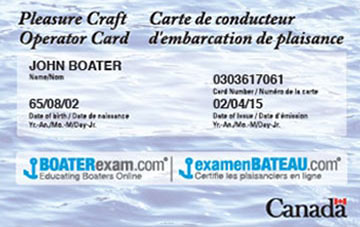
The PCOC is issued under the Canada Shipping Act, 2001, and the Competency of Operators of Pleasure Craft Regulations. The requirement was implemented in 1999 and phased in fully by September 15, 2009.
The PCOC is valid for life and does not require renewal. Recent changes to the Pleasure Craft License (PCL) don’t affect the PCOC's lifetime validity or its exemption from renewal.
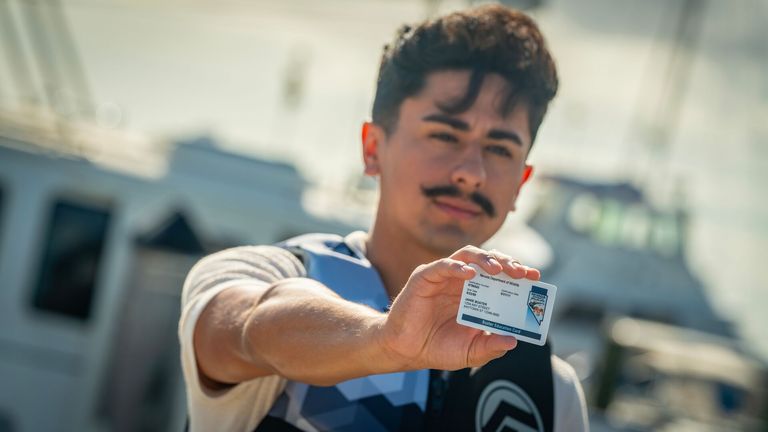
Operators must carry their original card on their vessel at all times, which means no paper copies and no screenshots on their phones.
The PCOC is administered by Transport Canada's Office of Boating Safety via accredited course providers such as BOATERexam.
Who Is Required to Get Boating Certification in Canada?
All boaters are required to obtain and carry a PCOC, except for a few narrow exceptions, which we will explore below.
The PCOC requirement applies regardless of boater age, vessel size, engine type (gas or electric), and horsepower. It includes all types of vessels, including boats, jet skis/PWCs, sailboats with auxiliary motors, and vessels with electronic trolling motors. This applies to both Canadian residents and visitors.
There is no grandfather clause, meaning even boaters with decades of experience on the water are required to take a boating safety course and hold proof of competence.
Non-motorized vessels, such as canoes, kayaks, and paddleboards, are exempt from the PCOC requirement. Always confirm boating certification rules with Transport Canada for the most up-to-date information.
Who Is Exempt From the PCOC Requirement?
Exemptions for the PCOC are limited and clearly defined. Most boaters on Canadian waters are required to hold a PCOC.
Even if you fall into an exempt category, it’s still important to stay up to date with the latest boating safety regulations, as they can change over time.
PCOC Exemptions | |
Pre-April 1, 1999, Course Certificate | The PCOC requirement came into effect on April 1, 1991, so boaters who completed a safety course before then (and can produce the original certificate) are considered to have valid proof of competency. |
Rental Boat Safety Checklist | If you’re renting, you’ll be required to complete a rental boat safety checklist provided by the rental agency. The agency will likely walk you through the safety requirements and checklist. |
Non-residents Operating Foreign-registered Vessels | If you’re visiting Canada and operating a vessel brought into the country that’s registered or licensed in your home country or state, you’ll have a 45-day exemption. After that period, you’ll be required to carry a PCOC if you plan on staying longer. |
Professional Marine Certificate Holders | Certain boaters may already hold a recognized marine training certification and therefore will not need to sit the PCOC. This list of competency trainings is clearly defined and based on an equivalency with the PCOC. |
Indigenous Peoples | An Indigenous person may be exempt from the PCOC requirement if they’re engaged in daily living or subsistence activities. |
Nunavut and the Northwest Territories | Proof of competency is not required when operating in waters of Nunavut or the Northwest Territories. |
Even if you fall into one of the narrow exemption categories, we recommend that you take a PCOC course because you'll gain practical knowledge and stay current with regulatory updates.
What Does the PCOC Course Cover?
The PCOC covers the fundamentals of safe boating, including
- Navigation rules and right-of-way
- Required safety equipment (life jackets, fire extinguishers, flares, and sound-signaling devices)
- Rules for operating personal watercraft (PWCs)
- The effects of alcohol and drugs on the water
- Emergency procedures and what to do if a boat capsizes
- Environmental responsibilities
- Local and federal boating laws
Safety courses are self-paced and will usually take a few hours to complete when taken online.
How to Get Your PCOC
Both in-person options and online providers are available for your PCOC safety course. In-person options are usually completed in a full day on scheduled dates, while online options can be completed whenever it suits and typically last a few hours.
Follow the steps below for the easiest and most time-friendly approach to get your PCOC accreditation.
- Create an account with a Transport Canada-accredited provider such as BOATERexam. Without this accreditation, your PCOC will not be valid.
- Study the course materials at your own pace and on any device. You can stop and start as the BOATERexam platform will automatically save your progress.
- Next, you’ll sit the official exam (Transport Canada-accredited test), and with the BOATERexam, you’ll be able to sit unlimited retrials.
- Upon completion, you’ll be able to print or save a temporary certificate immediately after passing the exam. This means you can hit the water the same day.
- Your physical card will be on its way and should arrive within two to three weeks.
The cost of the PCOC typically ranges from $30 to $70, depending on the provider, and it’s a one-time payment with no renewal required.
While some test-takers prefer the in-person experience, online options are date-free and require no scheduling or waiting for dates to open in the calendar.
If you’ve got a tight schedule or prefer to take on the information at your own pace, an online provider like BOATERexam is the superior option.
What Happens If You Don't Have a PCOC?
Operating without your PCOC can result in a $250 fine (in some jurisdictions, and for certain violations, fines may be higher). Multiple agencies enforce compliance with the rules and regulations governing Canadian waterways, including Transport Canada inspectors, the Canadian Coast Guard, and local marine law enforcement.
Fines apply whether you forgot your card or operated without having fulfilled the PCOC obligations. Photocopies will not be accepted, nor will screenshots on your phone.
It can be helpful to keep your PCOC with your other documentation, such as boat registration and insurance details, on board and to create a simple preboarding checklist to ensure you never leave it behind.
Take a Boater Safety Course and Get Your PCOC Today With BOATERexam
If you plan to operate a motorized pleasure craft in Canada, then you’ll most likely require a PCOC unless you fall into one of the narrow exemptions. There are really no excuses for not having a PCOC, and when you factor in the risk of fines and other penalties, operating without one can be a costly day on the water.
Online options are affordable, can be completed from the comfort of your own home, and result in a lifetime certification, just like an in-person course. For safe and legal boating on Canadian waterways, take the BOATERexam Canada course today

Frequently Asked Questions (FAQs)
Q: Who needs to take a boating safety course in Canada?
A: Anyone who operates a motorized pleasure craft in Canada generally needs to complete a Transport Canada-approved boating safety course and carry proof of competency, usually in the form of a Pleasure Craft Operator Card (PCOC).
Q: Is there a grandfather clause for experienced boaters in Canada?
A: No. Canada does not have a grandfather clause based on boating experience. Even if you've been operating boats safely for decades, you're still required to hold valid proof of competency unless you qualify for one of the limited exemptions established by Transport Canada.
Q: How do I get my boating license in Canada?
A: To get what's commonly called a Canadian boating license, you'll need to complete a Transport Canada-accredited boating safety course and pass the final exam. After you pass, you'll receive a temporary certificate you can use immediately while your permanent Pleasure Craft Operator Card (PCOC) is mailed to you.
Q: Do you need a boater's license in Canada?
A: If you operate a motorized pleasure craft in Canada, yes. Although many people call it a boating license, the required credential is a Pleasure Craft Operator Card (PCOC), which serves as your proof of competency on the water. Operators of non-motorized vessels, such as canoes, kayaks, and paddleboards, generally do not need a PCOC.
Q: Is a Canadian boating license permanent?
A: Yes. Once you've earned your Pleasure Craft Operator Card (PCOC), it remains valid for life and does not need to be renewed. However, you must carry your original card whenever you're operating a motorized pleasure craft, as photocopies and digital images are not accepted.
Q: What is the fine for not having a boat license in Canada?
A: Operating a motorized pleasure craft without carrying your required proof of competency can result in a $250 fine, although penalties may be higher depending on the jurisdiction and the specific violation. The fine may apply whether you never obtained a PCOC or simply failed to bring your original card.
Q: Can you drive a boat in Ontario without a license?
A: In most cases, no. Ontario follows the same federal boating competency rules as the rest of Canada, so operators of motorized pleasure craft are generally required to carry a valid Pleasure Craft Operator Card (PCOC) or qualify for one of the recognized exemptions under federal regulations.
Q: How much does a Canadian boating safety course cost?
A: Most Transport Canada-accredited boating safety courses cost between $30 and $70 CAD, depending on the course provider. The fee is a one-time cost that includes certification, and there are no renewal fees because the PCOC is valid for life.