Boat Registration in Canada: Do You Need to Licence or Register Your Boat?
Do you need to licence your boat, register it, or both? You’ll need a Pleasure Craft Licence (PCL) for most recreational boats, and a formal vessel registration if you have a commercial vessel, a marine mortgage, a reserved name, or a vessel that travels internationally under the Canadian flag.
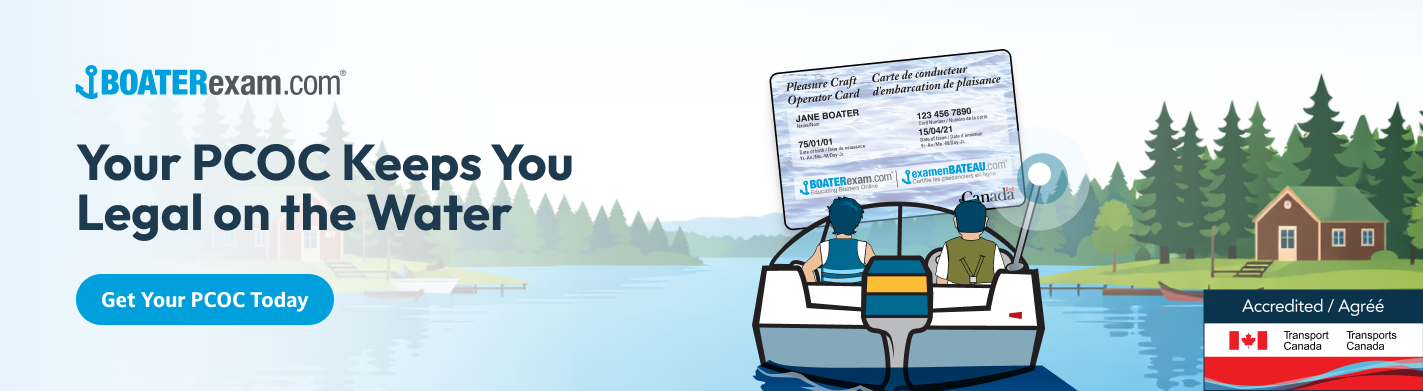
Note that neither the vessel registration nor a PCL is the same as the Pleasure Craft Operator Card (PCOC), which is the "licence" you need to operate your vessel.
Three distinct documents are involved in ensuring legality. And since the PCL rules changed on December 31, 2025, it's a great time to review your compliance. Here's what you need to know.
What Is a Pleasure Craft Licence (PCL)?
A PCL is an identification number assigned to your vessel, like a licence plate for a boat. Transport Canada issues these unique ID numbers, which are required if you have a recreational boat with at least one engine and a combined horsepower of 10 (7.5 kW) or more.
Remember, the PCL is for your vessel, not you or anyone else who operates it. There's only one PCL needed, no matter how many people operate the boat.
You'll need to display this identification number on both sides of your vessel's bow, in block letters that are at least 7.5 cm high, and above the waterline. Additionally, you'll need to carry proof of your PCL on board the vessel at all times when it's in operation.
What Is Vessel Registration?
Registering a vessel is a separate, more formal process. It establishes you as the legal owner and enters your boat into the Canadian Register of Vessels.
It's a mandatory requirement for commercial boats and those that travel internationally under the Canadian flag. You'll also need it if you have a marine mortgage on the vessel or reserve a unique name for your boat.
If you're a recreational boater who doesn't fall into any of those categories, you can generally satisfy legal requirements with just a PCL. For those who need to register their vessels, an application to Transport Canada is required.
You'll need to provide supporting documentation, including a bill of sale, a statement of qualification, and photos of all four sides of the vessel. Once a vessel is registered, it receives an official vessel number that's distinct from the PCL and also carries a Certificate of Registry.
PCL vs. Vessel Registration: What's the Difference?
Here's a quick overview of the differences between the PCL and vessel registration.
PCL vs. Vessel Registration | ||
| PCL | Registration | |
Who it applies to | Recreational Boats | Commercial, International, Mortgaged vessels |
What it proves | Vessel Identification | Legal Ownership |
Tied to | The boat (not the owner) | The boat (not the owner) |
Required documentation | Simpler | More extensive |
Cost | Approximately $24 CAD | Varies |
Renewal | Every five years | Varies |
Display Requirement | PCL number on both sides of bow | Registered vessels display official number |
What Are the New 2026 PCL Rules for Registering a Boat in Canada?
If you plan to register a vessel in Canada, you should know that the PCL rules have changed as of December 31, 2025.
Now, the PCL is no longer issued as a lifetime document, and all new and renewed licences are valid for five-year periods.
- For those who already had a "lifetime" licence, Transport Canada has assigned new expiration dates based on the original issue date. If your vessel, including jet skis, which are technically considered boats, was licenced on or before December 31, 1974, its PCL expired March 31, 2026.
- You can expect to pay about $24 CAD for a new, renewed, transferred, or duplicate PCL, and the fee will rise annually with inflation. If you're an Indigenous person exercising your treaty rights, there's no fee for your PCL.
- Additionally, you now have 30 days, instead of the previous 90, to update your vessel or personal information with Transport Canada. If you buy a boat, you'll need to transfer the PCL into your name within 30 days.
However, the PCL number stays with the vessel for its lifetime. If you're selling a boat, don't cancel the PCL when you sell. The buyer can still use it.
Beginning on December 31, 2027, wind-powered pleasure craft, such as sailboats over 6 metres in length, will also need a PCL.
Note that if you operate a vessel without a valid licence, you can be fined $250.
Changes to the PCL rules don't affect your PCOC, and your operator card is still valid for life with no requirement to renew it.
How to Apply for or Renew a Pleasure Craft Licence
There's a simple, step-by-step process to apply for or renew your Pleasure Craft Licence.
- Confirm that your boat needs a PCL (meaning it has an engine of 10 hp or more).
- Gather your contact information and your vessel's information, including the make, model, hull identification number (HIN), year, and engine details.
- Apply through Transport Canada's vessel licensing portal online or in person at any Service Canada location.
- Pay the fee, which is approximately $24 CAD.
- Place the PCL number on both sides of the bow, above the waterline, once you receive it.
- Always keep a copy of the licence on board your vessel.
When a vessel changes ownership, the boat dealer you purchased from can assist with the transfer.
Do You Need Both a PCL and a PCOC?
Yes, in most cases, Canadian boaters need both a PCL and a PCOC to operate a motorized vessel on Canadian waterways legally. The PCOC is a Canadian boating licence and covers you as the operator, while the PCL is the licence that covers the physical vessel itself.
When registering a boat in Canada, it helps to think of it like a car: The vehicle needs a licence (the PCL), and the driver needs a licence to operate it (the PCOC). Neither is a replacement for the other, and neither replaces the vessel registration if your situation also requires it.
You can earn your PCOC through the completion of a Transport Canada-approved boater safety course and the successful passing of the exam at the end. Expect to pay between $30 and $70 CAD for the PCOC course.
Register Your Boat and Take a Boating Safety Course Before Launching This Season
If you're a recreational boater in Canada, you probably need a PCL, not formal vessel registration. However, there aren't any more "set it and forget it" vessel licences due to the 2026 rule changes.
Make sure to check your PCL expiry date and update your information if it's inaccurate. Also, ensure you have your PCOC.
For anyone who hasn't gotten their PCOC yet, a boating safety course is the best way to get it. When you take a Transport Canada-approved course (like BOATERexam), you'll take the first step toward being a legal and confident vessel operator.

Frequently Asked Questions (FAQs)
Q: What is a Pleasure Craft Licence in Canada?
A: A Pleasure Craft Licence (PCL) is an identification number issued by Transport Canada for most recreational boats with at least one engine totaling 10 horsepower (7.5 kW) or more. It identifies the vessel, not the operator, and the number must be displayed on both sides of the bow while proof of the licence is kept on board.
Q: What changed about the Pleasure Craft Licence rules in 2026?
A: Beginning December 31, 2025, Pleasure Craft Licences are no longer valid for life. New and renewed licences are now valid for five years. Owners have 30 days to report changes in ownership or information, and most licensing services now require a fee. Existing lifetime licences were also assigned expiry dates based on their original issuance dates.
Q: Is the Pleasure Craft Licence the same as a boating licence?
A: No. A Pleasure Craft Licence applies to the boat itself, while a Pleasure Craft Operator Card (PCOC), often called a boating licence, applies to the person operating the boat. In many cases, you'll need both to legally operate a motorized recreational boat in Canada.
Q: How much does a Pleasure Craft Licence cost?
A: As of the 2026 rule changes, a new, renewed, transferred, or replacement Pleasure Craft Licence costs about $24 CAD. The fee is adjusted annually for inflation, and some Indigenous people exercising treaty rights may qualify for an exemption.
Q: Do I still need a boating safety course if my boat is already licenced?
A: Yes. A Pleasure Craft Licence identifies your boat, but it doesn't certify you to operate it. If you're required to carry a Pleasure Craft Operator Card, you'll still need to complete an approved boating safety course and pass the exam, even if your boat already has a valid PCL.
Q: Do you need to register a boat in Canada?
A: Not every boat needs to be registered. Most recreational boats only require a Pleasure Craft Licence. Vessel registration is generally required for commercial vessels, boats with marine mortgages, vessels traveling internationally under the Canadian flag, or boats with a reserved name.
Q: How do I transfer ownership of a boat in Canada?
A: When you buy a boat with a Pleasure Craft Licence, you must transfer the licence into your name within 30 days. The PCL stays with the boat, so the seller should not cancel it. You'll need to submit the ownership transfer to Transport Canada, and many boat dealers can help complete the process.