How Long Does the Alberta Boating License Test Take?
To get a Pleasure Craft Operator Card (PCOC), Alberta boaters must pass a Transport Canada boating safety test, which has a strictly enforced one-hour and 15-minute (75-minute) time limit. Aspiring boaters should study to make the path to boat licensing as smooth as possible.
So, how long does the Alberta boating license test take? That depends on whether you're considering the time it takes to complete a certified boating safety course or just the test itself. Here's what to know about the course and exam, so you can get your license and start exploring Alberta's beautiful waterways.
| Alberta Boating License Exam — Quick Facts | ||
| Time to Take ⏲ 1 hr 15 mins max | Total Course + Exam Time ⏲ 3–4 hours | Course Cost 💰 $30-$70 CAD |
| Valid 😎 Lifetime | ||
In This Guide
- How Long Does the Alberta Boating License Test Take?
- Tips to Finish the Alberta Boating License Test Faster
- What Is the Alberta Boating License (PCOC)?
- Who Needs a Boating License in Alberta?
- Step-by-Step: How to Get Your Alberta Boating License
- When Will You Receive Your Permanent Card?
- Get Your Alberta Boating License with BOATERexam
- Frequently Asked Questions (FAQs)
How Long Does the Alberta Boating License Test Take?
Once you complete the boating safety course, you'll need to take the exam to get your license. It's best to take the test right after you finish the course, so the information is still fresh in your mind.
The Exam Time
The Transport Canada boating safety test has a strict time limit of 75 minutes (one hour and 15 minutes). The exam consists of 50 multiple-choice questions, all of which you must answer within the allotted time.
Exam Details
To pass the 75-minute exam, you'll need to score 75% (38 correct answers out of 50). It's an open-book format available online 24/7, and you can take it on any device with an internet connection.
If you don't pass the exam on your first try, you'll need to wait 24 hours before taking it again. Most safety course providers offer free, unlimited attempts to complete the exam.
Total Time Commitment (Realistically)
While the exam has a 75-minute time limit, the entire process of getting your Canadian boater's license takes approximately 3–5 hours. That's because there's a mandatory study time of at least three hours of online coursework before you can access the exam.
There are also quizzes after each chapter, and a typical course has 5–6 chapters. You'll need to pass each one of the quizzes as you work through the course material to take the exam at the end.
3 Tips to Finish the Alberta Boating License Test Faster
Use these tips to help you take the Alberta boating license test faster!
| How to Take the Alberta Boating License Test Faster: |
|
Realistically, how long does the Alberta boating license test take? The test takes no more than 75 minutes—but when you account for the required course modules before the exam, you can expect to spend 3–5 hours to get your license.
Due to the required study time, plan to commit no fewer than three hours to the course and exam.
What Is the Alberta Boating License (PCOC)?
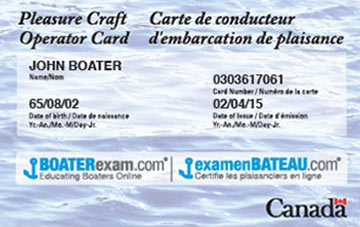
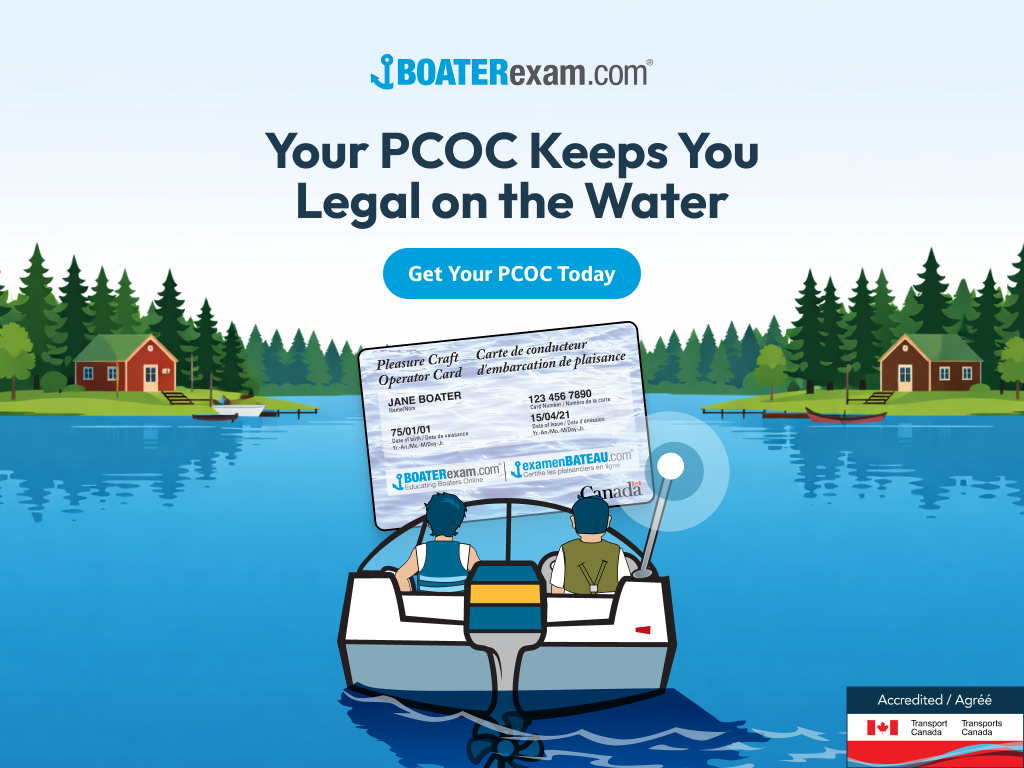
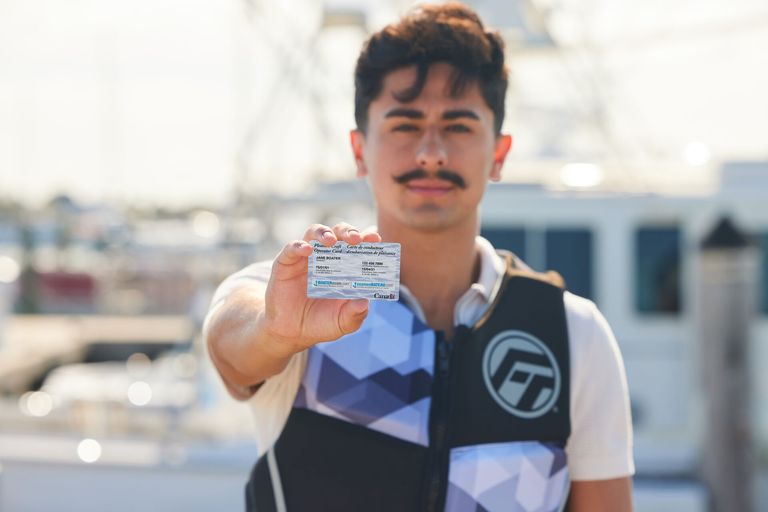
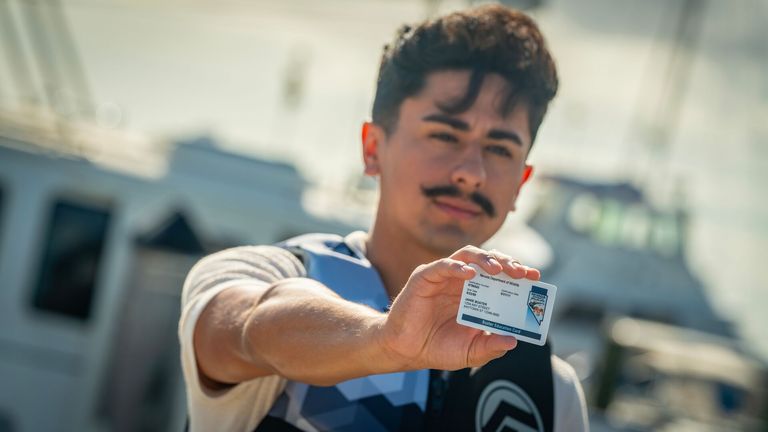
The Alberta boating license is officially called the Pleasure Craft Operator Card (PCOC). Earning this card proves that you understand boating safety rules, including navigation, equipment, and emergency procedures.
Once you receive your boating license, it's valid for life, and you'll never have to worry about renewing it.
Who Needs a Boating License in Alberta?
If you're operating a motorized vessel anywhere in Canada (not just Alberta), you'll need a PCOC. This card is a requirement for boaters of all ages, with additional restrictions for younger vessel operators. The license covers the operation of powered boats and PWCs, such as jet skis.
If you have a non-motorized boat, such as a kayak or canoe, you aren't required to have a boating license to operate it.
Step-by-Step: How to Get Your Alberta Boating License
How long does the Alberta boating license test take, and how can you easily get your license? There are specific steps to follow that make getting your PCOC easy and convenient.
Step 1: Choose an Approved Online Provider
When you look for an online course provider, ensure it's Transport Canada–accredited. Fortunately, BOATERexam is approved, and we can help you get your Alberta boating license.
Step 2: Complete the Study Course
Once you choose a provider, you'll need to pay for the course (which generally includes the cost of the boating license, too). Then you'll gain access to the modules, and you can start working through them. You'll need to spend at least three hours on coursework.
Step 3: Pass Chapter Quizzes
Each chapter has a short quiz at the end to help ensure you understand the material covered in that section. You'll need to pass the quiz before you can move to the next part of the course.
Step 4: Take the Final Exam
The final exam has 50 questions, and you'll need to get at least 38 of them correct to pass. There's a 75-minute time limit and an open-book format, so you can look up answers if you forget something.
Step 5: Get Your License
Once you pass the course, you can print your temporary license immediately. That allows you to start boating the same day and enjoy all that Alberta's waterways have to offer.
When Will You Receive Your Permanent Card?
You'll receive your permanent PCOC in the mail. Generally, you can expect to receive it within a few weeks, but you can use your temporary card in the meantime.
With your permanent boating license, you'll be able to feel more confident, reduce your risk of accidents and injuries, and possibly qualify for a lower boat insurance rate.
Get Your Alberta Boating License with BOATERexam
Getting your Alberta boating license is a straightforward process, and you can do it in a single afternoon or evening.
With BOATERexam, you can easily complete your boating safety course and pass the Alberta boating license test from the comfort of your home. Once you pass the test, your temporary PCOC will allow you to legally boat and enjoy your time on the water immediately.
Frequently Asked Questions (FAQs)
Q: How long does it take to get your boating license in Alberta?
A: Getting your boating license in Alberta typically takes just a few hours to a full day of studying. The online course and test can be completed in as little as 3–4 hours if you're well-prepared. Once you pass the test, you can receive a temporary operator card immediately. Your permanent Pleasure Craft Operator Card (PCOC) arrives by mail within a few weeks.
Q: How hard is the Canadian boating license test?
A: The Canadian boating license test is considered moderately easy for most people, especially with some preparation. It consists of 50 multiple-choice questions covering topics like navigation rules, safety equipment, and boating laws, and you need a score of at least 75% to pass. Many online study courses provide practice tests that closely mirror the real exam, making it straightforward to prepare effectively.
Q: How much does it cost to get a boating license in Alberta?
A: The cost of getting a boating license in Alberta typically ranges from about $30 to $70 CAD, depending on the provider you choose. This fee usually covers access to the online study course, the exam, and the issuance of your Pleasure Craft Operator Card (PCOC). Some providers may charge additional fees for expedited card delivery or printed study materials.
Q: Is a boating license hard to get?
A: A boating license is generally not hard to get, as the process is designed to be accessible to most people. The study material is straightforward, covering basic safety rules, navigation, and regulations, and many people pass the exam on their first attempt. Taking advantage of practice tests and online study guides makes the process even more manageable.
Q: Is a boating license permanent?
A: Yes, the Pleasure Craft Operator Card (PCOC) is a lifetime certification and does not expire once you earn it. You only need to get it once, and it is valid across all of Canada. However, it's always a good idea to stay updated on any changes to boating regulations, even though the card itself does not require renewal.