How to Write a Canadian Boat Bill of Sale (Complete Guide)
If you're writing a primary bill of sale of watercraft in Canada (also called a Canadian boat bill of sale), you need to include specific information about the vessel, purchase terms, buyer, and seller. This should be a signed, written agreement that includes the seller and buyer details, vessel specs, any extras and accessories included, the full hull identification number (HIN), legal declarations, the purchase price, and a condition clause.
The bill of sale is the seller's proof that they no longer own the boat and the starting point for a buyer who needs to transfer the Pleasure Craft Licence (PCL), get insurance, and pay any sales tax. Here's what to include, how to write it out, and how it differs from (but ties into) a PCL transfer.
What Is a Boat Bill of Sale in Canada?
A Canadian boat bill of sale is a legal document that records a vessel's transfer of ownership from seller to buyer. The parties create it privately (or generate one online from a boat-sale template) and should both sign it.
A bill of sale matters for every private vessel sale, no matter the engine size. However, the steps after the sale differ depending on the vessel size and horsepower.
Remember, the bill of sale isn't the same thing as the Pleasure Craft Licence (PCL). While the bill of sale proves the sale took place, the PCL identifies the vessel and its owner with Transport Canada.
Why a Primary Bill of Sale of Watercraft Matters
One of the most important reasons to get a primary bill of sale is legal protection. If you're the seller, it's your evidence of the sale date and terms. If ownership is ever disputed, you have a written document showing you sold the vessel to a specific person on a certain date.
Bill of Sale vs. PCL Transfer vs. Vessel Registration | |||
| Bill of Sale | PCL Transfer | Vessel Registration | |
| What it is | Private signed agreement between buyer and seller | Application to Transport Canada to update licence holder | Entry in the Canadian Register of Vessels |
| Who issues it | Buyer and seller (no government form) | Transport Canada | Transport Canada |
| When it's required | Every private boat sale | Boats with 10 hp/7.5 kW+ engines, within 30 days of sale | Boats 15+ gross tonnes, with a marine mortgage, or needing a reserved name |
| What it proves | The sale happened, on what terms | Who currently holds the licence for the boat | Legal title and right to fly the Canadian flag |
For buyers, the bill of sale is one of the supporting documents Transport Canada accepts for proof of ownership. You'll need it to complete a Small Vessel Registry entry or apply for a PCL.
Additionally, lenders and insurers will also ask for your bill of sale to confirm you own the vessel and how much you paid for it before they issue a marine loan or boat insurance coverage. Some Canadian provinces also use the stated purchase price on the bill of sale to calculate the tax you'll owe on the vessel.
How to Write a Boat Bill of Sale in Canada
You need to include six specific categories of information in a boat bill of sale Canada that government agencies will accept. Transport Canada provides a template for registered vessels that includes all the proper details and helps you create a compliant, signed, dated document that's accurate and complete.
- Collect all the vessel details, including its make, model, HIN, and year of manufacture. The HIN is vital because it's the primary identifier for matching the correct boat to the bill of sale.
- Add the buyer's and seller's full legal names and addresses. These must match their government-issued identification so the PCL transfers correctly.
- Include the agreed-upon sale price and payment method. The sale price may be used for provincial tax calculations, so it should be accurate.
- Note the sale date and the vessel's condition, including the term "as-is." That language protects the seller if a buyer later claims they found issues you didn’t disclose before they agreed to buy.
- Both the buyer and seller should sign and date the bill of sale. You don't need a notary or witness, but some buyers still want this for added assurance that the document is legal and compliant.
- The buyer and seller should keep signed copies for insurance, registration, and tax records. Don't throw away your bill of sale after the PCL transfer is complete, because it's important proof of the agreement if questions come up later.
Once the buyer and seller sign the bill of sale of watercraft, it becomes proof of ownership for the buyer until the registration or PCL transfer is complete, and also protects the seller.
What to Include in a Canadian Boat Bill of Sale | ||
| Field | What to Enter | Why It's Needed |
| Vessel details | Make, model, year, hull identification number (HIN) | Uniquely identifies the specific boat for the PCL transfer |
| Buyer name and address | Full legal name and current address | Must match government ID for the PCL application |
| Seller name and address | Full legal name and current address | Confirms who is releasing ownership |
| Sale price | Dollar amount and payment method | May be used for provincial sales tax calculation |
| Sale date | Date the transaction was completed | Starts the 30-day PCL transfer window |
| Condition/"as-is" terms | Statement of condition at time of sale | Protects seller from post-sale liability claims |
| Signatures | Both parties, dated | Makes the document legally valid as proof of ownership |
Bill of Sale vs. Pleasure Craft Licence Transfer
The bill of sale is a document between the buyer and seller, while the PCL transfer happens between the buyer and Transport Canada. These are separate steps, and completing a bill of sale won't update any Transport Canada records. If you're the buyer, you still need to complete the PCL transfer so that you're listed as the licence holder.
The reverse is also true, because the PCL transfer application requires proof of ownership as a supporting document. One document you can use for proof is the primary bill of sale of watercraft.
If you're buying a vessel with a marine mortgage, one that's 15 gross tonnes or more, or one that needs a reserved name, you'll need to register your vessel by going through the Canadian Register of Vessels rather than getting a PCL.
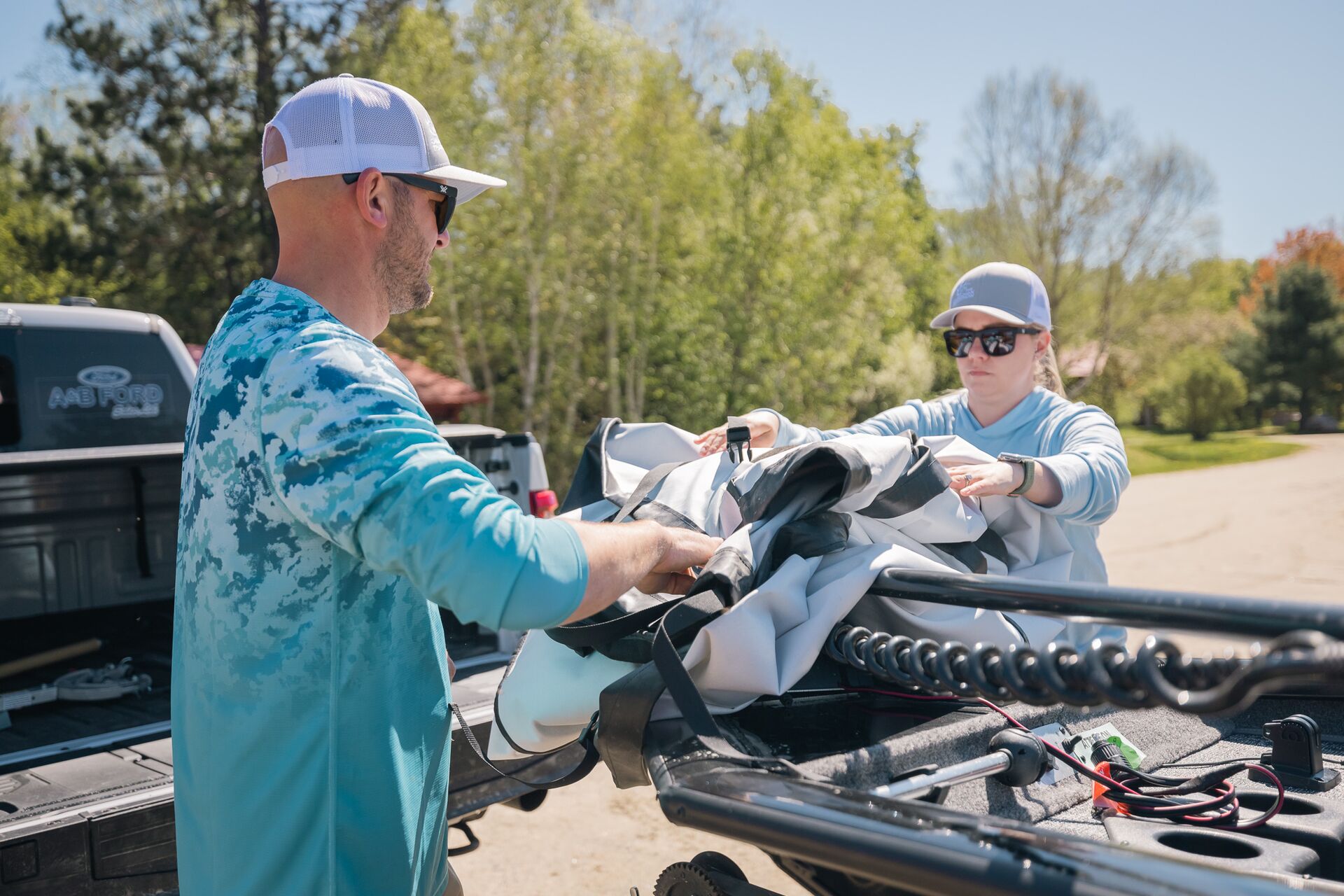
What Happens After the Sale
After the sale, both the buyer and seller have responsibilities under the Small Vessel Regulations.
Buyers can:
- Apply to transfer the PCL within 30 days, using the bill of sale as proof of ownership.
- Use the vessel during that 30-day transfer window.
- Keep documents on board confirming your name, address, and the transfer date.
- Pay the service fee for the transfer application, adjusted each year for inflation.
- Avoid operating the boat without a valid licence, missing the transfer window, and failing to meet PCL requirements to prevent fines.
If you're the seller, you'll need to sign over your existing PCL and keep a copy of the bill of sale. Don't cancel the PCL once the boat is sold, because that number should stay with the vessel.
Get Your Boat Sale (and Licence) Squared Away Before Hitting the Water
A completed bill of sale protects both the buyer and seller and sets the buyer up for the next steps, including insurance, PCL transfer, and tax filing. Remember, the PCL transfer is a separate action from the bill of sale, and both are required to stay in compliance.
Before you take any boat out under new ownership, make sure you have a current PCOC. Being properly licenced to operate your pleasure craft is just as important as correctly licensing the vessel itself. Take the boater safety course for Canada and get your PCOC squared away.

Frequently Asked Questions (FAQs)
Q: Do I need a bill of sale to register a boat in Canada?
A: If you're registering a vessel with Transport Canada, you'll generally need documentation showing the chain of ownership, which can include bills of sale. For a pleasure craft that only needs a PCL, Transport Canada accepts a bill of sale as proof of ownership but also accepts certain other documents.
Q: Is a bill of sale legally required for a private boat sale?
A: A bill of sale is important written evidence of a private boat sale. Buyers need proof of ownership when applying for a PCL, and registered vessels have specific title-document requirements.
Q: Is a bill of sale the same as a Pleasure Craft Licence transfer?
A: No. A bill of sale documents the transaction between the buyer and seller. A PCL transfer updates the vessel's licensing information with Transport Canada. The bill of sale can serve as proof of ownership for the PCL application, but it does not transfer the license on its own.
Q: What information must be included in a boat bill of sale?
A: For PCL purposes, the proof of ownership should identify the seller and buyer, describe the boat, and include the HIN when available and the existing PCL number when applicable. For registered vessels, Transport Canada requires the seller and buyer names and signatures, a vessel description, and the transaction date.
Q: Does a boat bill of sale need to be notarized in Canada?
A: Not generally for a Canadian private pleasure craft sale or PCL application. Transport Canada accepts ordinary bills of sale as proof of ownership. A notarized bill of sale is specifically required in certain vessel-registration situations, such as when the seller is a foreign owner.
Q: Can I write my own boat bill of sale without a template?
A: Yes. Transport Canada accepts bills of sale as proof of ownership and does not require a particular template for a PCL application. For registered vessels, Transport Canada also provides Form 6 as a bill of sale template if you want to use one.
Q: How long should I keep a copy of my boat bill of sale?
A: Keep it for as long as you own the boat and for as long as you may need to establish your ownership or document the transaction. Transport Canada recommends keeping proof of ownership for future ownership transfers and retaining title documents for future transfers if the Chief Registrar requests them.