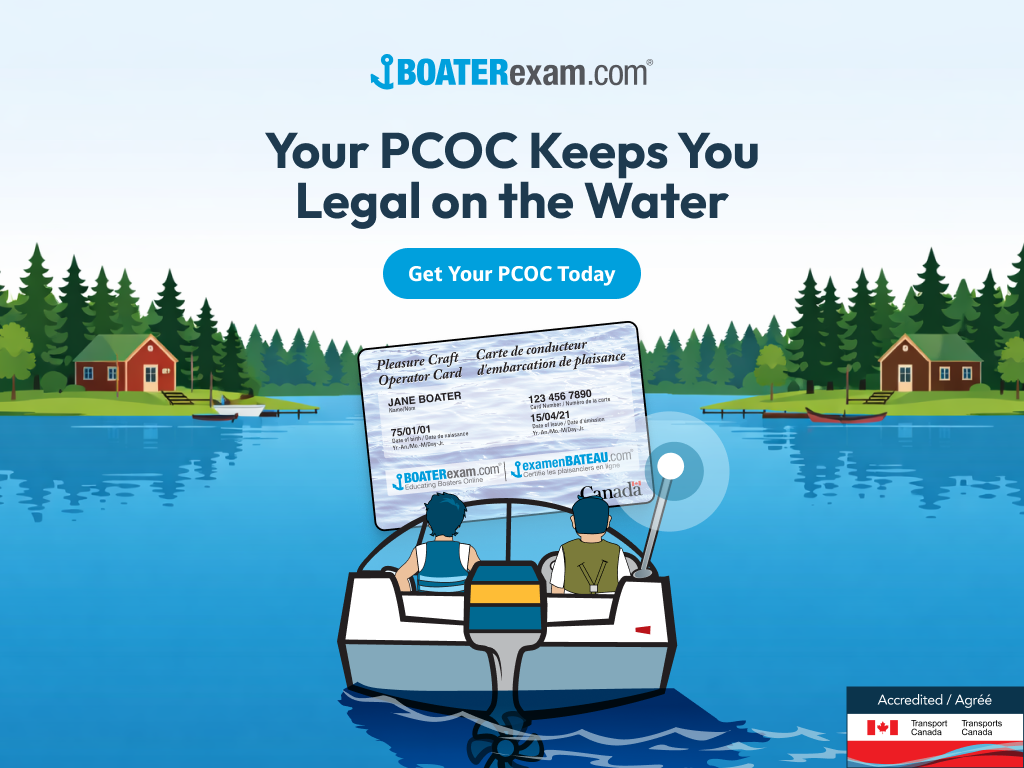
You can get a free boater safety exam practice test through us at BOATERexam. We're a Transport Canada-accredited provider, and our boating license practice test questions follow the real PCOC exam format and topics, but they aren't official, verbatim test questions.
Here are 10 sample questions, with answers and explanations included. Remember, this is a warm-up for the test, not a substitute for taking an accredited boating safety course and passing the official exam. Let's get started.
10 Practice PCOC Exam Questions
When you're preparing to get your Pleasure Craft Operator Card (PCOC), it can help to take a practice test. You’ll get a feel for the kinds of questions you'll be asked and the format they'll be in.
Practice questions can help ease anxiety and help you feel ready for the test. Below are some sample questions modeled on the exam format and topics, but they aren't official Transport Canada exam questions.
1. Which side is the "port" side of a boat?
Right side when facing forward
Left side when facing forward
Right side when facing backward
Left side when facing backward
Answer: B. The left side when facing forward.
Explanation: Port and starboard are relative to the bow of the boat, not the person viewing it, so they're the same no matter which way you're facing.
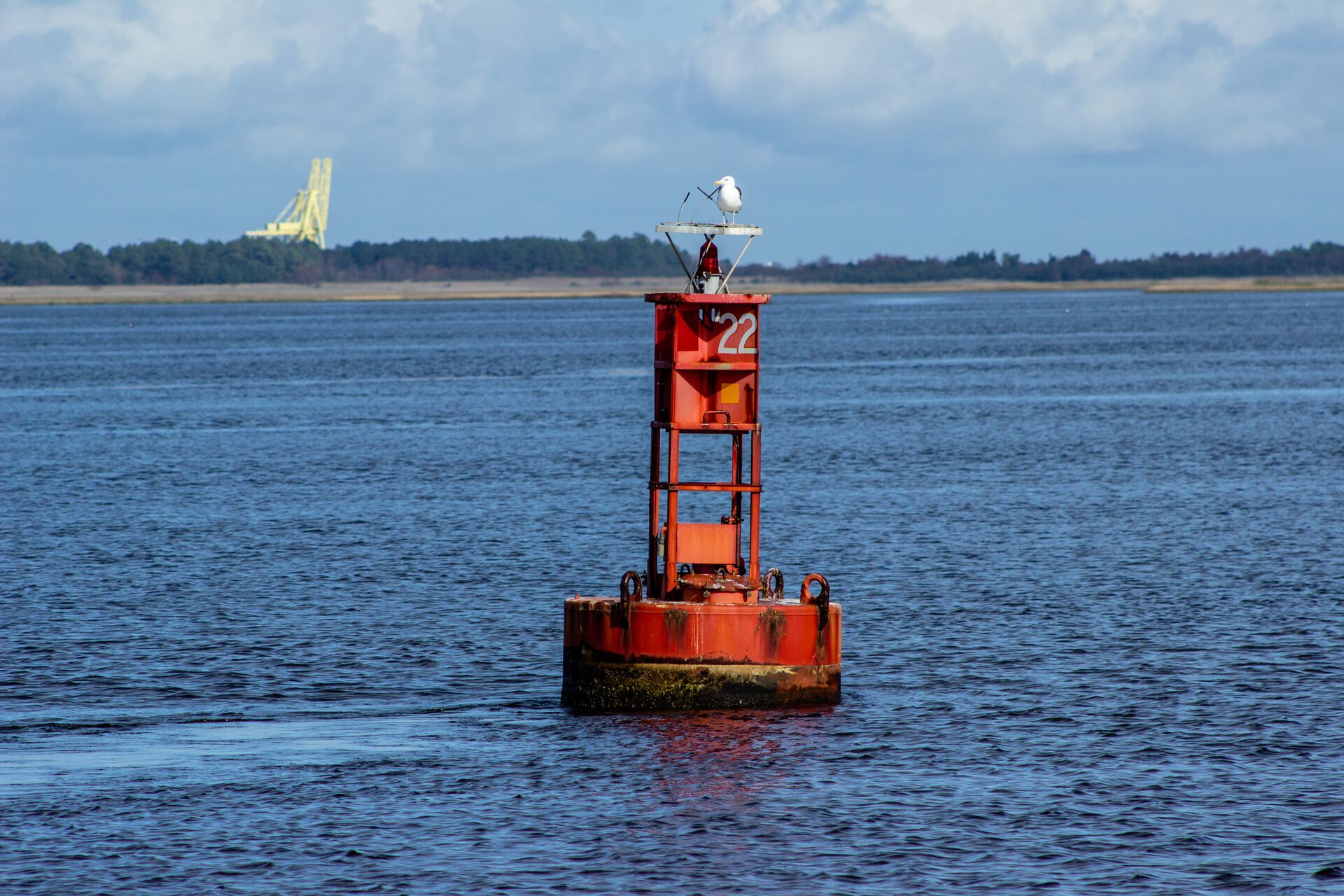
2. A red buoy with an odd number marks which side of a channel when returning from open water?
The left side
The right side
The middle (you can go around it on either side)
Buoys with numbers aren't used to mark channels
Answer: A. Keep the buoy on the left side of your boat.
Explanation: Canada uses the IALA-B lateral buoyage system. That means odd-numbered, red buoys mark the left side of the channel when coming back to shore.
3. Under Canadian navigation rules, which vessel generally has the right of way over a powerboat?
A larger powerboat
A powered kayak or canoe
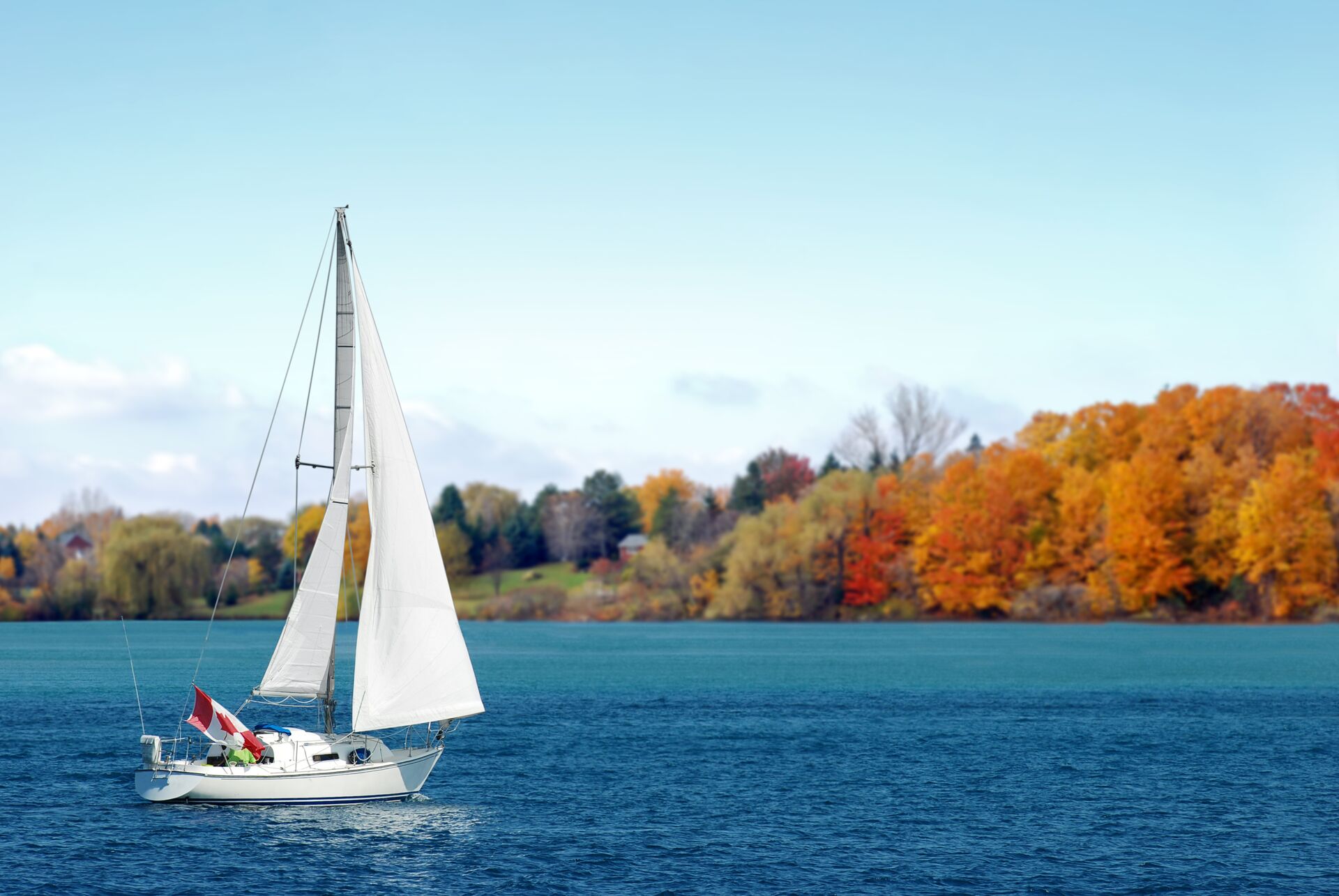
A sailboat under sail
A federal vessel
Answer: C. A sailboat that's under sail and not using its engine.
Explanation: Any vessels that can't maneuver quickly to move out of the way, including a sailboat that's not using its engine, typically have priority over powered craft with more maneuverability.
4. What is the unposted speed limit within 30 meters of shore in most Canadian waters?
5 km/h
10 km/h
15 km/h
20 km/h
Answer: B. 10 km/h.
Explanation: This 10 km/h limit helps reduce wake damage, protects swimmers, and prevents shoreline erosion.
5. Which of these is required safety equipment on every powered pleasure craft, regardless of length?
An approved lifejacket or PFD for each passenger
A marine radio
An anchor
A bell or whistle
Answer: A. An approved lifejacket or PFD for each passenger.
Explanation: Transport Canada requires this for every vessel, regardless of size, and larger vessels require additional safety equipment.
6. What does a diver-down flag on the water indicate?
A diver in trouble
A good location for diving
A diver is in the water
Diver training taking place
Answer: C. A diver is in the water nearby, so boaters should slow down and stay away.
Explanation: Not giving clearance around dive flags puts divers at risk of being struck by a boat propeller and is a common topic on the PCOC exam.
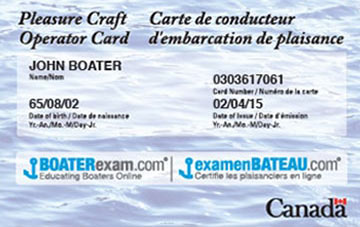
7. Who is required to hold a Pleasure Craft Operator Card (PCOC)?
Boating instructors
Everyone who gets on a boat
Adults over 18
Anyone operating a motorized vessel in Canada
Answer: D. Anyone who operates a motorized pleasure craft in Canada.
Explanation: There's no "grandfather" clause or minimum engine-size exemption, and every boat operator needs a PCOC, regardless of age, vessel length, or engine size (including electric trolling motors).
8. What should you do first if your boat capsizes?
Stay with the boat and give everyone life jackets
Swim toward shore
Radio for help
Try to flip it back over
Answer: A. Stay with your vessel if possible and have everyone put on a life jacket.
Explanation: A capsized boat is generally easier for rescuers to see than a swimmer, and your vessel will likely float even if it's been swamped.
9. Operating a pleasure craft while impaired by alcohol falls under which law?
Canada's Criminal Code only
The Canada Shipping Act, 2001 only
Canada's Criminal Code and the Canada Shipping Act
Individual provinces' DUI laws
Answer: C. Canada's Criminal Code and the Canada Shipping Act, 2001.
Explanation: Operating a boat while impaired has the same criminal liability as driving under the influence.
10. How long is a Pleasure Craft Operator Card valid once issued?
10 years
For life
5 years
1 year
Answer: B. For life.
Explanation: Unlike a Pleasure Craft License (PCL), which must be renewed every five years under updates to the law that took effect in 2025, the PCOC doesn't expire or need renewal.
How to Use the Free Boating License Practice Test
Using the free boat license practice test is simple. Here's how to do it.
Start by reviewing the refresher section on boating rules.
Answer all 10 of the sample questions.
Check your score, then review the answers and explanations.
Identify any topics you didn't understand well before taking the real exam.
Enroll in an accredited boating education course when you feel ready.
Take the official exam and get your PCOC.
Taking a practice test can be a great start toward getting your PCOC, and will help you get comfortable with the format used and the kinds of questions you'll be asked. Then, you'll be better prepared for the official exam.
How Many Questions Are on the Real PCOC Exam?
The official Transport Canada boating safety test has 50 multiple-choice questions. It's an open-book test, so you can look at notes or look up answers while taking it, and you have 75 minutes to complete it.
In contrast, the free practice test above has only 10 questions. The real exam will cover many more aspects of boating safety.
What Score Do You Need to Pass the Boating License Test?
To pass the boating license test, you need to get 75% correct (38 out of 50 questions). Each question is weighted equally, and you don't need to meet a separate pass/fail threshold for each topic area.
It's a good idea to feel confident answering all 10 practice questions correctly before you take the exam, so you feel more prepared and have the best chance of passing on the first try. Once you pass your boating license test, you'll be ready to explore Canadian waterways and can also use your PCOC in US waters.
Can You Retake the Boating License Test If You Fail?
Yes, you can retake the test if you fail, but the specifics vary by course provider. Once you pass the exam, you won't have a record of a failed attempt or a penalty that follows you.
If you review any weak topics from the practice test before starting the official exam, you'll generally have a lower chance of needing a retake.
How Long Does the Practice Test Take to Complete?
The practice test is self-paced and has 10 questions, so it takes only a few minutes to complete. In most cases, it should take less than 20 minutes.
For comparison, the official exam gives you 75 minutes to complete it, so the practice test is a quick, low-pressure warm-up.
PCOC Boater Safety Exam Practice Test vs. Official Exam
Feature
Free Practice Test
Official PCOC Exam
Number of Questions
10
50
Time Limit
Self-paced, no limit
75 minutes
Passing Score
None — practice only (aim for 10/10)
75% (38 of 50)
Open Book
Yes
Yes
Cost
Free
Included in course fee, $30–$70 CAD
Retakes
Unlimited, instant
Varies by provider (confirm policy)
Issues Official PCOC
No
Yes
Boating Rules Refresher: What the PCOC Exam Covers
Understanding what the boating license practice test and official PCOC exam cover can help you feel prepared. To help you prepare for the official test, review a solid safety equipment checklist.
Generally, you can expect the main test to look for knowledge of:
Rules on navigation and right-of-way
Required vessel safety equipment
Markers and buoys
Vessel Operation Restriction Regulations (VORRs)
Standard emergency procedures
Contraventions Regulations and non-compliance fines
You may also want to explore a Safe Boating Guide to build knowledge and confidence before your exam.
From Practice to Pass: Your Next Step Toward a PCOC is with BOATERexam
Taking the free practice test is a quick, low-pressure way to see if you're ready before taking the official Transport Canada exam. Once you take and pass that exam, you'll get your PCOC, which is valid for life and works all across the country, as well as in most of the United States.
Q: Is there a free practice test for the Canadian boating license?
A: Yes. BOATERexam offers a free 10-question Canadian boating safety practice test covering topics similar to those on the PCOC exam. The practice test is separate from the official Transport Canada exam.
Q: How many questions are on the real PCOC exam?
A: The PCOC exam has 50 multiple-choice questions. Transport Canada establishes the exam format, requirements, and topics covered.
Q: What score do you need to pass the boating license test?
A: You need a score of 75% or higher to pass the PCOC test. On a 50-question exam, that means answering at least 38 questions correctly.
Q: Can you retake the boating license test if you fail?
A: Yes. You can retake the PCOC test if you don't pass. You can take it once every 24 hours, with no overall limit on attempts.
Q: How long does the practice test take to complete?
A: The free practice test has 10 questions and is self-paced, so it should take only a few minutes for most people. Allow up to about 20 minutes if you want time to review your answers and explanations.
Q: Are the practice test questions the same as the real PCOC exam questions?
A: No. The practice questions follow the format and subject areas of the PCOC exam, but they are not official, word-for-word Transport Canada questions. The BOATERexam practice page also presents the quiz as a way to experience the type of questions you can expect.
Q: Do you need to create an account to take the free boating license practice test?
A: No account is indicated as necessary for the free practice test. The practice-test page presents the 10-question quiz separately from the account-based process for getting certified.